
African Grey Birthday Party Ideas: Celebrating the Most Intelligent Pet Bird
African grey parrot birthday ideas that respect the species: the birthday feast, enrichment that engages their cognitive level, what decades of ownership actually looks like, and how the African grey community marks a bird's hatch day.
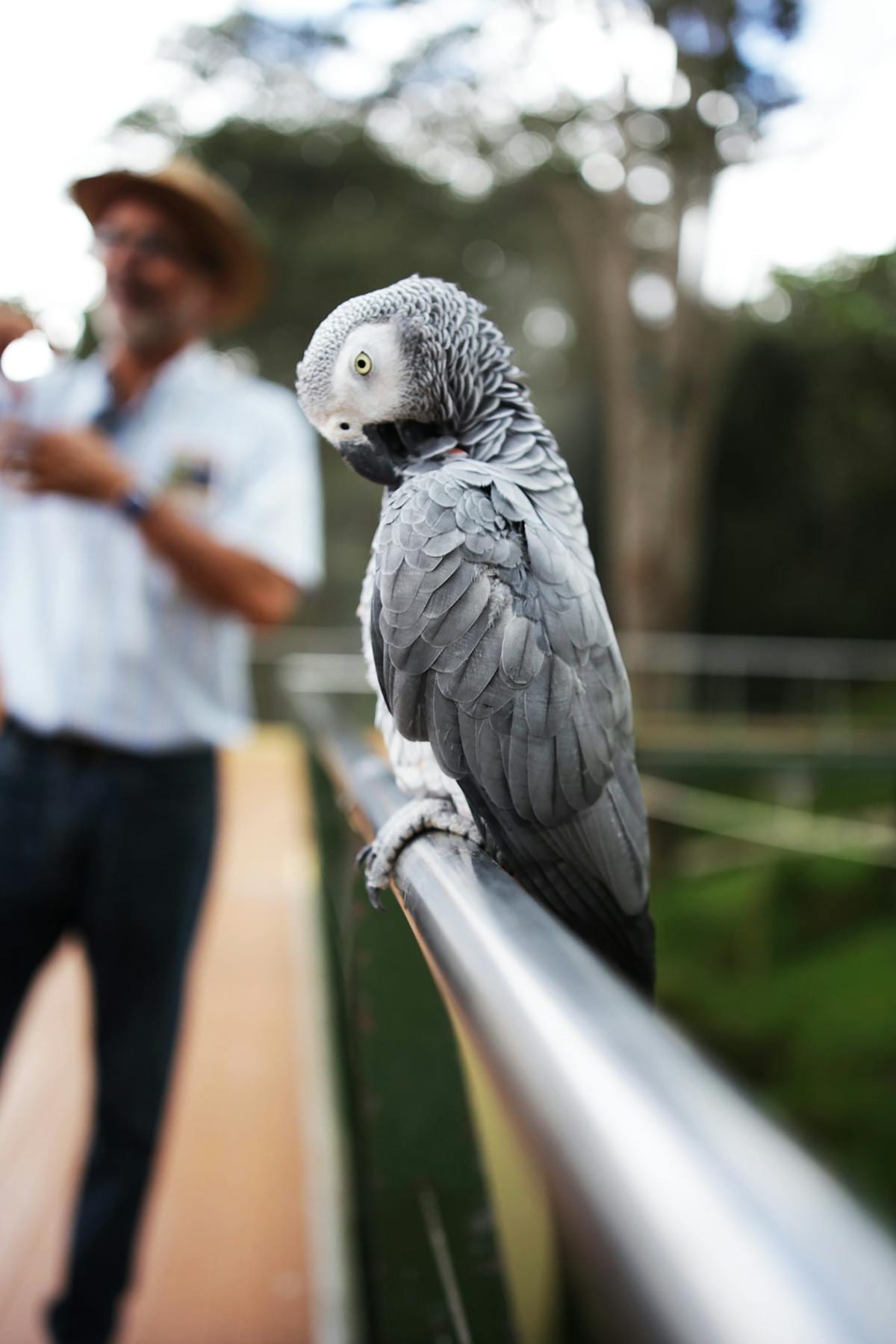
African grey parrots celebrate birthdays differently from every other species because they process everything differently. They watch you prepare the birthday feast, comment on it, remember that you did this on a previous occasion, and may or may not participate depending on how they feel that afternoon. The birthday for a Congo (Psittacus erithacus) or Timneh (Psittacus timneh) grey is a high-quality food upgrade, a new cognitive enrichment puzzle, and an acknowledgment of a relationship that can outlast the keeper. These birds live 40 to 70 years. The birthday matters.
Teflon is Lethal: Say It Every Time
Polytetrafluoroethylene (PTFE) fumes from overheated non-stick cookware kill parrots. An overheated non-stick pan, air fryer, or space heater with a non-stick coating produces fumes that are lethal to African greys within minutes. Per VCA Hospitals and the ASPCA, Teflon toxicity is one of the most common preventable causes of bird death in captivity. The birthday feast is prepared in stainless steel, cast iron, or ceramic only. This is not a birthday-specific rule, it applies every day.
Congo vs. Timneh
Congo African grey (Psittacus erithacus): Larger, bright red tail. The most commonly kept and most recognized subspecies. Highly intelligent, sensitive to change, prone to feather-destructive behavior when understimulated or stressed. Birthday celebrations should stay consistent with the bird’s established routine.
Timneh African grey (Psittacus timneh): Smaller, maroon tail, horn-colored upper mandible. Generally described by keepers as slightly less anxiety-prone and more adaptable than the Congo. Both subspecies are cognitively comparable and both require equal commitment.
The Birthday Feast
Per VCA Hospitals’ African grey care guide, the diet should be primarily high-quality pelleted food (50 to 60%), supplemented with fresh vegetables and limited fruit. African greys are prone to hypocalcemia (calcium deficiency) and to fatty liver disease from an imbalanced diet.
Pellets. Harrison’s, Roudybush, or another vet-approved pelleted diet as the nutritional foundation. Don’t reduce pellets for the birthday.
Birthday chop. Finely chopped collard greens, kale, bok choy, shredded carrot, bell pepper, cooked sweet potato, green beans. African greys often prefer slightly softer textures to raw crunchy vegetables. Dark leafy greens are particularly important for calcium intake.
Birthday fruit. A few pomegranate arils (African greys engage with the seeds enthusiastically), a small piece of mango, or blueberries. Fruit is a small supplement, not the centerpiece, due to sugar content.
What never appears. Per ASPCA: avocado (persin toxicity). Chocolate. Caffeine. Alcohol. Onion and garlic. Apple seeds (cyanide). Cherry pits. Xylitol. Salty or processed food. Mushrooms in significant quantities. Dairy products.
Birthday Cognitive Enrichment
African greys need enrichment that matches their cognitive level. A birthday without a puzzle is a missed opportunity.
Multi-step foraging toy. Food hidden inside a container, inside another container, with a mechanism the bird has to figure out. African greys work through these systematically and solve them faster than almost any other species. A new puzzle on the birthday keeps them occupied 30 to 45 minutes.
A novel object. Something the bird has never seen before, placed in or near the cage. African greys observe novel items carefully from a distance, then investigate methodically. This is cognition, not just curiosity.
Language interaction session. African greys are uniquely capable of reciprocal language use. An extended interactive conversation session, naming objects, asking questions, engaging in the back-and-forth the bird initiates, is enrichment specific to this species.
Shreddable toys. Paper-wrapped treats, balsa wood blocks, palm fronds. African greys shred methodically.
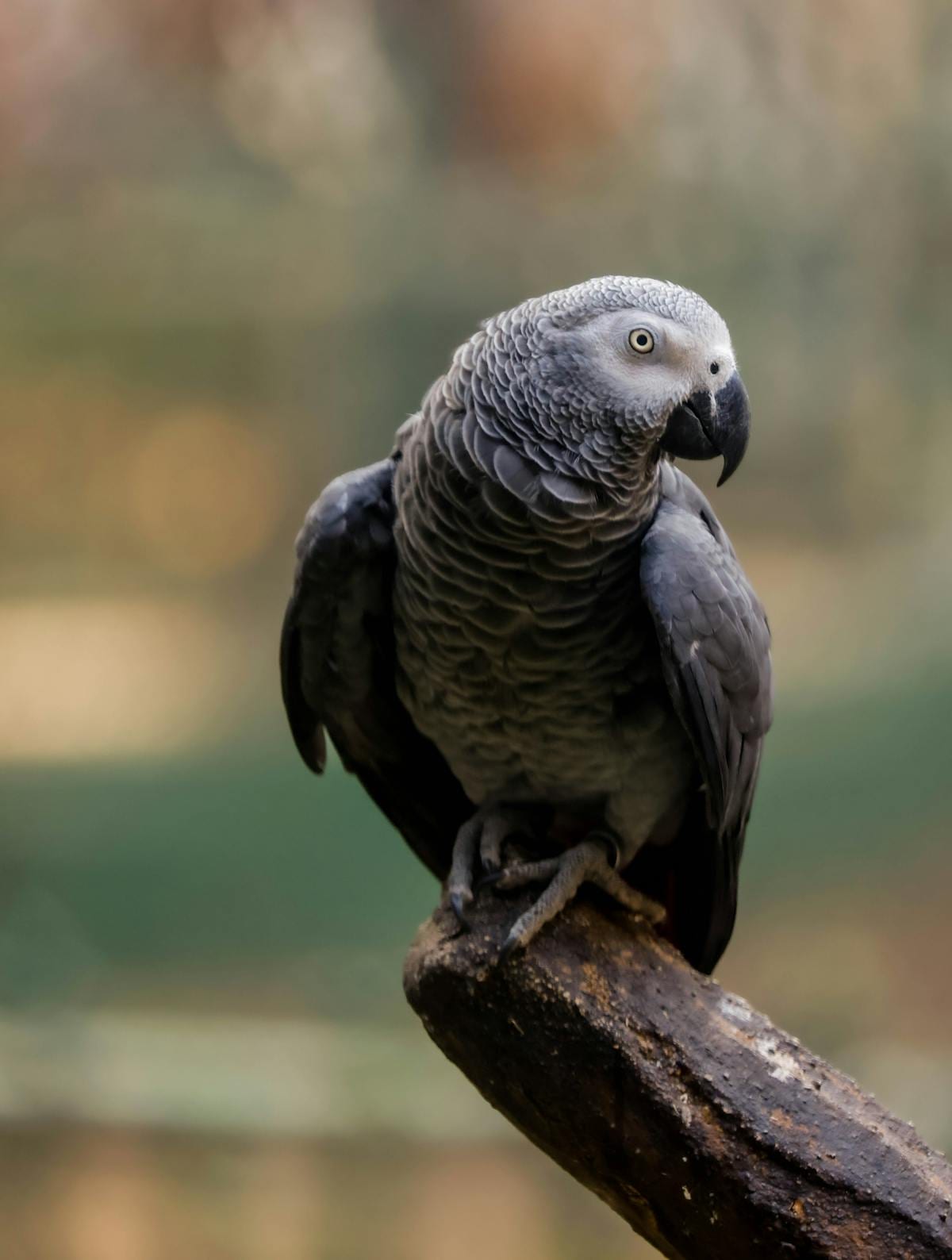
The Emotional Reality
African greys form genuine bonds with their primary keeper. They can develop anxiety disorders, feather-destructive behavior, and health problems from inadequate social interaction, inconsistent routine, or trauma. The birthday is an appropriate occasion to assess honestly whether the bird’s needs are being met year-round. An under-stimulated African grey is a visibly different animal from a properly engaged one. The Association of Avian Veterinarians has resources for behavioral issues specific to this species.
Photography
African greys are less visually dramatic than macaws but more photographically complex. The feather texture, the intelligent eye, and the pinning behavior (rapid pupil constriction and dilation during peak engagement) are what the community photographs.
The eye-contact shot: an African grey focused on something, pupils pinning, is showing engagement and photographs distinctively. The foraging session: the bird working through a puzzle with tongue and beak visible.
Community format for birthday posts: clear photo, subspecies noted (Congo or Timneh), age, vocabulary or behavior milestones from the past year, honest note on the bird’s current state.
How Long Do African Greys Live?
Congo African greys: 40 to 60 years in captive care. Timneh greys similarly. Documented individuals have exceeded 70 years. Many keepers make legal provisions for their bird in estate planning. The birthday at year 30 is a genuine milestone for both keeper and bird.
FAQ
My African grey said “Happy Birthday” this morning. Did it understand?
Probably not in the full conceptual sense, but the answer is genuinely uncertain. Research by Dr. Irene Pepperberg with her grey Alex demonstrated African greys use language contextually in ways suggesting more than rote mimicry. A birthday greeting from an African grey is a real phenomenon.
My grey won’t eat the birthday chop. Is something wrong?
African greys can be neophobic around new foods. Try eating the chop in front of the bird enthusiastically: peer social facilitation is a documented food-introduction technique for this species. Introduce new foods gradually as part of the regular rotation.
Should I invite people over for my grey’s birthday?
Most African greys are cautious around strangers. A large gathering is a stressor. The birthday is better as a keeper-bird event. If guests come, ensure the bird can retreat and observe at its own pace.
Parrot Birthday Supplies
Parrot birthdays are about foraging enrichment and treat variety:
- Litewoo Bird Foraging Feeder (Stainless Steel), fruit, vegetable, and seed holder. Works for African greys, macaws, conures, and similar birds.
- CIEZZU Bird Foraging and Chewing Toy Set, multiple foraging elements for medium and large parrots.
- Bird Spinner & Foraging Basket Set, mental enrichment basket plus spinning rattle toy.
Sources
- VCA Hospitals: African Grey Parrots
- ASPCA Animal Poison Control: People Foods to Avoid Feeding Your Pets
- Association of Avian Veterinarians: AAV Home
For another highly intelligent long-lived parrot: Amazon Parrot Birthday Party Ideas
For the general exotic birthday framework: Pet Birthday Party Guide
- You
- Your pets
- Confirm