
Degu Birthday Party Ideas: A No-Sugar Celebration for Chile's Most Curious Rodent
How to throw a degu birthday party: the short safe-treat list, the Type 2 diabetes risk that shapes every food decision, why degus need companions, and what makes these South American rodents genuinely special to keep. RSPCA-verified.
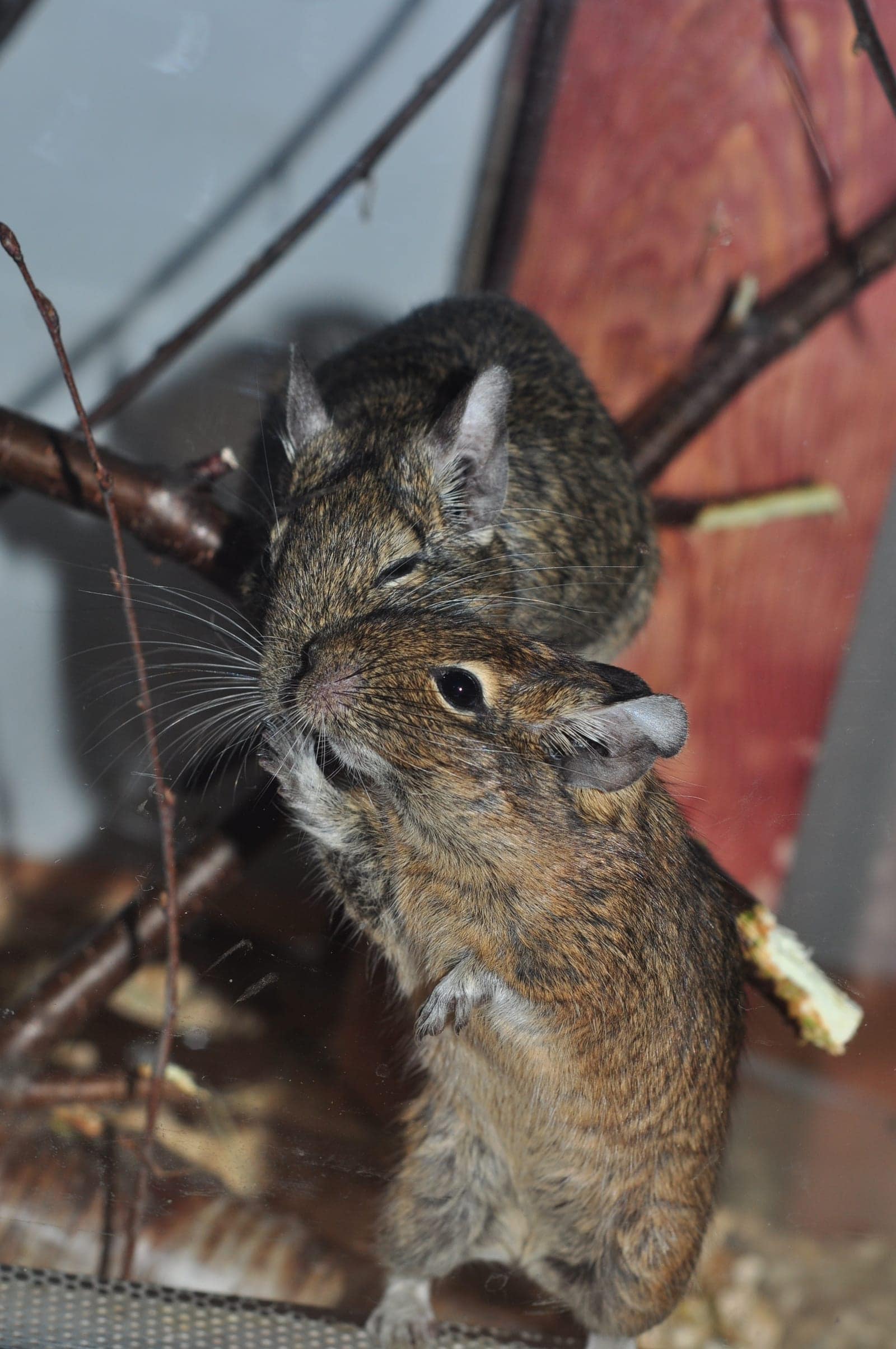
Degus are native to coastal Chile: small, brown, tufted-tailed rodents who live in large social colonies, communicate constantly, and are genuinely diurnal — meaning they’re awake during the day, which makes birthday parties actually convenient. Their treat list is short, and the shortness is intentional. Degus are highly prone to Type 2 diabetes. Their bodies don’t regulate blood sugar the way most mammals do, and the consequences of repeated sugar exposure accumulate. The birthday food is hay, herbs, and maybe a rose hip. That’s the spread. The rest of the party is enrichment, company, and time with their colony.
The Social Requirement
Degus are colonial animals. A solo degu is an unhappy degu with a shorter lifespan and visible signs of loneliness. They need to be kept in groups: at minimum a pair, preferably a larger same-sex group. Their vocalizations — chirps, whistles, squeaks, and a distinctive bark — are primarily social communication. A degu with no one to communicate with is a degu in distress.
The birthday party includes the whole colony. There is no separating the birthday degu for individual spotlight time, except briefly for handling if they’re comfortable with it. The celebration is for the group.
The Diabetes Risk: The Most Important Degu Fact
This is not a minor dietary caution. Degus are prone to Type 2 diabetes and cannot properly regulate blood sugar. Per RSPCA guidance, their diet needs to be low in sugar and fat. Feeding fruit, high-sugar vegetables, or commercial treats containing molasses isn’t a small indulgence — it’s a cumulative health risk.
Many degu pellets on the market contain molasses. Per RSPCA guidance, check the ingredients on any pellet product and avoid those that do.
Safe Birthday Treats
Per RSPCA, degus’ primary diet should be good-quality hay (the majority of food intake), supplemented with appropriate nuggets (degu-specific, or chinchilla/guinea pig nuggets without molasses) and small measured portions of leafy vegetables daily.
Safe birthday treat options:
- Fresh herbs (dandelion leaves, parsley, fresh mixed herbs): RSPCA specifically mentions dandelion leaves and fresh herbs. Most degus respond enthusiastically. This is the birthday food.
- Fresh hay variety: A different hay type than usual (orchard grass, meadow hay alongside their standard Timothy) counts as enrichment and treats simultaneously.
- Dried herbs: Parsley, chamomile, dried dandelion. Good foraging material with no sugar risk.
- Rose hips (dried, unsweetened): High in vitamin C, low in sugar, a community-standard treat for degus and chinchillas alike.
- Small piece of broccoli: Occasional only — can cause gas in quantity. Fine as a birthday extra.
What RSPCA says to avoid:
Fruit: high sugar content, diabetes risk.
High-sugar vegetables: carrot, sweet potato, beetroot, and parsnip specifically named as too high in sugar. Avoid.
Commercial treat products: frequently contain excessive sugar. Check every label before buying.
Foods formulated for rabbits, hamsters, or gerbils: not appropriate for degus.
Any pellets containing molasses.
Birthday Enrichment
Degus are active, intelligent, and strong burrowers. Related to chinchillas, they share many enrichment needs.
Foraging in fresh deep bedding: Add a new section of deep bedding with birthday herbs scattered through it. Degus burrow through immediately, finding the herbs as foraging enrichment.
New chew materials: Apple wood sticks, pear wood, willow — all safe, all good for continuously growing teeth. A birthday bundle of new chew wood is a practical gift used for weeks.
New climbing structure: Degus are agile climbers. A new wooden shelf, platform, or cardboard tunnel in their enclosure gets immediate investigation and becomes part of the established territory.
Dust bath: Like chinchillas, degus benefit from dust baths. Fresh dust or a new bath container is a practical birthday gift used multiple times per week.
Degus and Chinchillas: Key Difference
People sometimes confuse degus with chinchillas. Their care is similar in many ways, but degus are diurnal (active during the day, not at dusk/dawn). A degu birthday party can happen at noon. Their diabetes sensitivity is at least as severe as chinchillas’ already-strict dietary requirements.
They’re also often more interactive than chinchillas with their owners: more likely to approach, more likely to groom a trusted human, more consistently curious about what you’re doing.
FAQ
Do degus know it’s their birthday?
No. They know there are fresh herbs in the bedding, something new to investigate, and their colony companions are active. For a well-housed degu group, that’s a genuinely good day.
Can I ever give my degu a tiny piece of fruit?
RSPCA guidance is clear: fruits are unsuitable due to diabetes risk. Even “very occasionally” may be inadvisable. The birthday treat is herbs and hay.
Are degus legal everywhere?
In the US, degus are banned in California, Hawaii, and some other states. Verify local laws before acquiring them.
What if I don’t know my degu’s birthday?
The gotcha day works well. Degus can live 5 to 8 years in captivity, so an annual tradition on a consistent date is worth building. Our gotcha day party ideas guide covers the format.
Party Supplies
- Dog Birthday Party Supplies Set, full party kit with hat, bandana, banner, and balloons.
- Puppy Cake Complete Birthday Cake Kit, peanut butter birthday cake kit with pan and candle.
- Bocce’s Bakery Birthday Cake Treats, wheat-free birthday treat biscuits.
Sources
- RSPCA: Degu Diet
- ASPCA: Small Pet Care
- You
- Your pets
- Confirm