
Goat-Safe Birthday Treats: What to Feed, What to Skip, and the Copper Problem Nobody Warns You About
Verified safe and unsafe foods for goat birthday treats: the apple-and-herb spread, what goats genuinely love, the copper toxicity risk that catches goat owners off guard, and what to keep away from the enclosure.
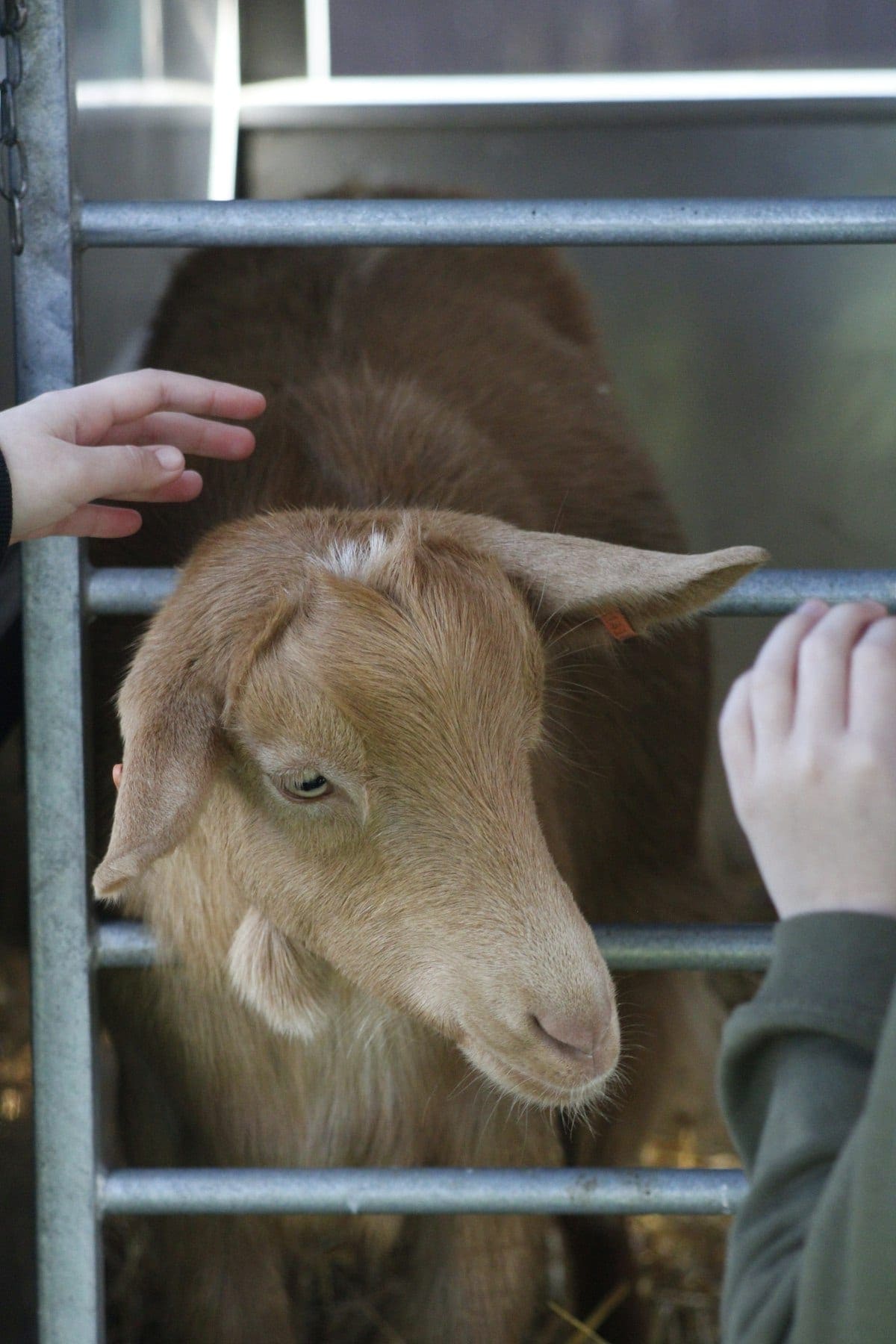
Goats eat almost everything. That’s the reputation, and it’s mostly accurate, goats are browsers by nature, accustomed to foraging through varied plant material, and they explore new things with their mouths as a primary sensory tool. The safety list for goat birthday treats is genuinely long.
The constraint is not the variety of safe foods. It’s two specific risks that catch goat owners off guard: copper toxicity from supplements designed for other species, and a shorter list of plant-based toxins that goats will occasionally consume without apparent self-preservation instinct.
The Birthday Treat Spread
Per Penn State Extension and University of Maryland Extension goat nutrition guidelines, these are safe in reasonable amounts as treats:
Fruits (universally enjoyed):
- Apples, the most popular goat treat; core removed, sliced
- Pears, same treatment
- Watermelon, flesh and rind; the rind is often preferred
- Grapes, whole or halved
- Strawberries, blueberries, raspberries
- Banana, flesh and peel
- Melon, cantaloupe and honeydew
- Mango, flesh only, pit removed
Vegetables:
- Carrots, whole or chunked
- Celery
- Cucumber
- Leafy greens: romaine, kale (moderate amounts), spinach (moderate; high oxalate content)
- Green beans
- Fresh corn, most goats love it; whole cob or kernels
- Pumpkin, flesh and seeds; seeds have some deworming properties
- Beets, safe; the staining is significant and will turn everything pink
- Turnips and parsnips
Herbs: Fresh herbs are a genuine goat treat. Most goats investigate and eat basil, mint, parsley, and cilantro enthusiastically. Scatter them through the enclosure for foraging enrichment.
Commercial goat treats: Manna Pro Goat Treats (apple flavor is popular) and similar pellet-format treats designed specifically for goats. Manna Pro Goat Treats Check that any commercial treat is formulated for goats, not sheep, not cattle, not horses.
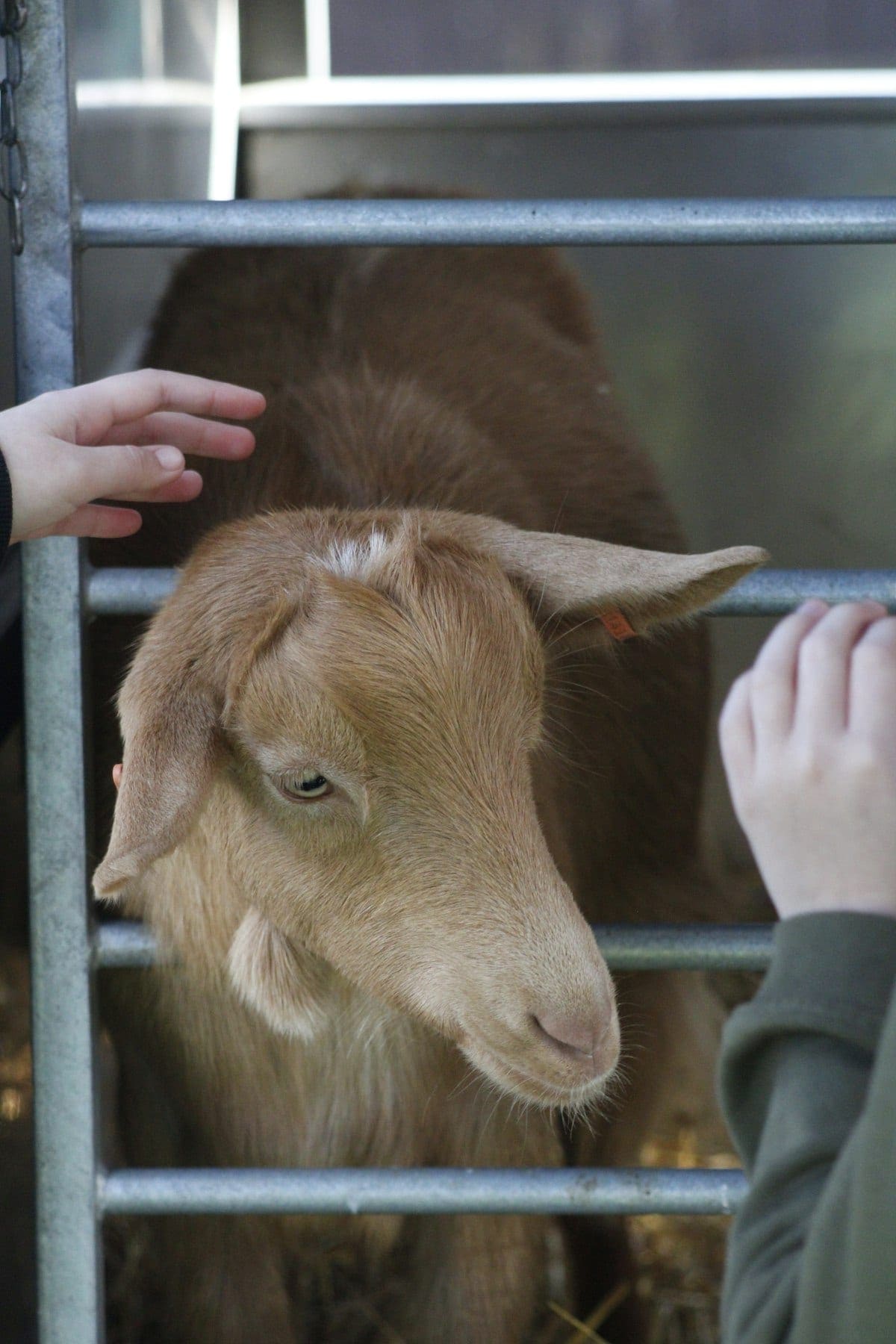
The Apple Birthday “Cake”
Stack 3–4 cored apple slices on a flat rock or wooden board in the enclosure. Add carrot sticks around the base. Scatter fresh herbs over the top. Optional: a drizzle of unsulfured molasses.
The goat will approach, smell the whole arrangement, investigate it with her lips before committing, and then eat the herbs first, the molasses-covered pieces next, and work through the rest. It will not look like she appreciated the effort. She appreciated the effort.
The Copper Problem
This is the thing to know that most goat birthday treat articles skip entirely.
Goats require dietary copper and are more copper-sensitive than most ruminants, they can develop copper toxicity from feeds or mineral supplements designed for sheep (which have much lower copper tolerance, so sheep feeds are low-copper) but also from mineral blocks or supplements designed for cattle or horses that weren’t formulated for goats’ specific copper ceiling.
The practical implication for birthday treats:
- Feed only treats specifically listed as goat-safe or confirmed for small ruminants
- Don’t offer mineral blocks designed for cattle, sheep, or horses as birthday items
- Don’t offer commercial goat feeds in large quantity as a treat, the accumulated mineral content matters
- Fresh fruits, vegetables, and goat-specific commercial treats are all fine; these don’t carry the copper loading risk
Cornell University College of Veterinary Medicine has detailed goat toxicology resources if you need to assess a specific supplement.
What to Keep Out of the Birthday Enclosure
Azaleas and rhododendrons: One of the more common goat poisoning causes. Highly toxic to small ruminants. Check the perimeter of any space where the birthday party happens.
Cherry, peach, plum, and other stone fruit leaves: Cyanogenic compounds, particularly in wilted leaves.
Avocado: Persin toxicity.
Onion and garlic in quantity: Hemolytic anemia. A very small accidental exposure is unlikely to cause acute toxicity but avoid feeding these deliberately.
Rhubarb: Oxalic acid; kidney damage.
Lily of the Valley, foxglove, yew: All highly toxic to goats. Keep ornamental plants out of the birthday enclosure entirely unless you’ve confirmed each one is safe.
Moldy hay or feed: Mycotoxins are a serious health risk for ruminants. The birthday hay should be fresh.
Bracken fern: Thiamine deficiency and bone marrow suppression with repeated exposure.
For the full birthday party setup, see goat birthday party ideas.
Sources
- Penn State Extension, Feeding Goats, extension.psu.edu/feeding-goats
- University of Maryland Extension, Goat Nutrition, extension.umd.edu/resource/goat-nutrition
- Cornell University CVM, Small Ruminants, vet.cornell.edu/animal-health-diagnostic-center/species/small-ruminants
- You
- Your pets
- Confirm