
Indian Ringneck Gotcha Day: Marking the Anniversary With Your IRN
Indian ringneck gotcha day ideas: the anniversary feast, the color mutation photo tradition, how to handle the bluffing phase on the gotcha day, and what the IRN community posts for their bird's most significant milestone.
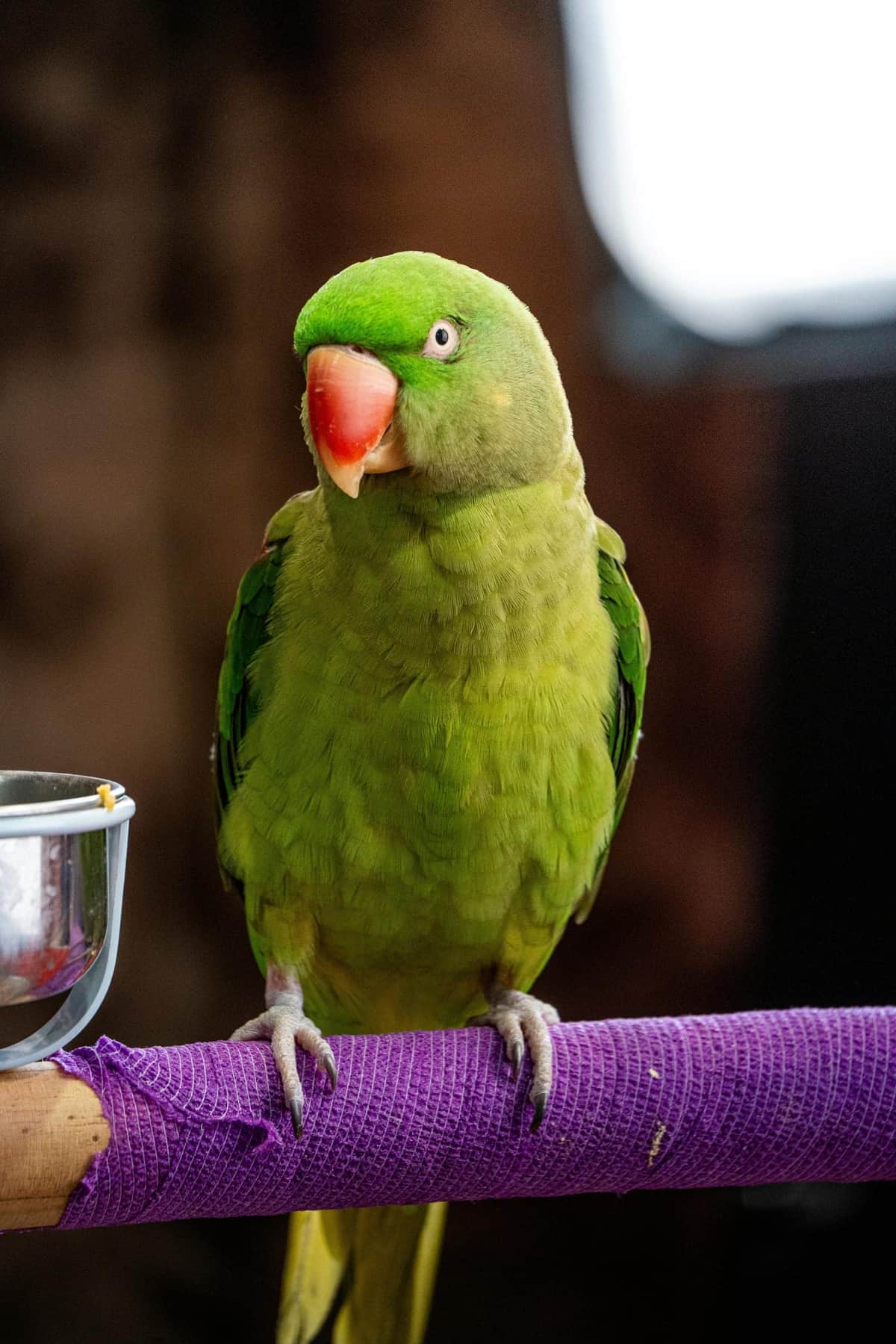
Indian ringneck gotcha days have a particular significance in the keeper community because of the mutation market and the bluffing phase. Indian ringnecks come in dozens of documented color mutations (blue, yellow, violet, turquoise, albino, lutino, and combinations), and keepers who purchased a specific mutation track how the coloring develops across years. The gotcha day is the annual mutation documentation photo. The bluffing phase, if the bird is going through it, adds a layer of complexity: a bird in the bluffing phase on its gotcha day may not be the warmly interactive animal it was before puberty, and the keeper’s commitment through that period is itself worth marking.
Teflon Warning
Non-stick cookware fumes kill birds. All gotcha day food prepared in stainless steel, cast iron, or ceramic.
The Anniversary Feast
Per VCA Hospitals, high-quality pellets form the dietary base for IRNs, supplemented with fresh food.
Anniversary chop: bell pepper, leafy greens, sweet potato, corn, carrot. Finely chopped for the IRN’s handling preference.
Fruit treat: pomegranate seeds, berries, apple (seeds removed), mango.
A small seed treat: a few sunflower seeds or a mixed seed sprinkle as the anniversary treat component. Not the meal, just the treat.
No-list as always: avocado, chocolate, onion, garlic, apple seeds, alcohol, xylitol.
The Mutation Documentation Photo
Indian ringneck mutations are the central visual interest of the species for many keepers. The gotcha day photo documents how the mutation is expressing this year:
Standard green (wild-type): the green plumage with the adult ring (visible in males after 2 to 3 years). Photograph in natural light to show the blue-green undertone correctly.
Blue mutation: a crisp side-view in natural light shows the blue accurately. Avoid warm artificial light, which shifts the blue toward green.
Lutino (yellow) and albino: both look washed out in direct sunlight. Overcast outdoor light or softbox indirect light shows the feather texture clearly.
Violet and turquoise mutations: lighting-sensitive. Natural overcast light is most accurate.
The gotcha day photo should include the mutation name in the post caption. The IRN community is knowledgeable about mutations and will engage more with a correctly identified post.
Handling the Bluffing Phase on Gotcha Day
Indian ringnecks go through a bluffing phase typically between 4 months and 1 year of age where previously friendly birds become territorial and may bite. This phase is uncomfortable for keepers who’ve been through it and alarming for keepers experiencing it for the first time.
If the gotcha day falls during the bluffing phase:
- Keep the celebration low-key and food-focused
- Don’t force handling or the photo session
- Offer the anniversary feast in the enclosure and step back
- Verbal interaction from outside the cage is appropriate
The bluffing phase resolves. A bird that bites at 8 months often returns to baseline gentleness at 14 months. The gotcha day during the bluffing phase is still worth marking, even if the celebration looks different.
The Ring Milestone
Male Indian ringnecks develop their namesake ring between 2 and 3 years of age. The first full ring appearance is a significant visual milestone. If the gotcha day coincides with or follows this development, the comparison photo showing pre-ring and post-ring coloring is a specific tradition in the IRN community.
Females don’t develop the prominent ring but often show a faint shadow ring. Female IRNs are generally noted by the community as slightly quieter than males and sometimes quicker to talk than males of the same age.
FAQ
My IRN is in the bluffing phase and has been aggressive for months. Will it get better?
Yes, in most cases. The bluffing phase typically resolves on its own as the bird reaches sexual maturity. Consistent calm interaction, not forcing handling, and maintaining the relationship through the phase is the approach. Many keepers describe post-bluffing birds as dramatically more affectionate than pre-bluffing.
My IRN doesn’t talk yet. Is this normal at gotcha day year 2?
Indian ringnecks are capable talkers but the timing of speech development varies significantly. Some birds start talking at 8 months; others not until 2 to 3 years. Sex is not a reliable predictor (both males and females talk). The gotcha day at year 2 without talking is not a cause for concern. Note it in the anniversary post and check back at year 3.
My IRN is the same green mutation as thousands of others. Is there still a worthwhile mutation photo tradition?
Yes. Wild-type green IRNs are the most common captive mutation and still have an active keeper community. The ring development timeline, the adult coloring quality, and the individual bird’s behavioral development are all worth documenting annually regardless of mutation rarity.
Parrot Birthday Supplies
Parrot birthdays are about foraging enrichment and treat variety:
- Litewoo Bird Foraging Feeder (Stainless Steel), fruit, vegetable, and seed holder. Works for African greys, macaws, conures, and similar birds.
- CIEZZU Bird Foraging and Chewing Toy Set, multiple foraging elements for medium and large parrots.
- Bird Spinner & Foraging Basket Set, mental enrichment basket plus spinning rattle toy.
Sources
- VCA Hospitals: Parakeets (Ringneck)
- ASPCA Animal Poison Control: Animal Poison Control
For the food guide: What Can Indian Ringnecks Eat at a Party?
For the full birthday party guide: Indian Ringneck Birthday Party Ideas
For the general gotcha day framework: Pet Birthday and Gotcha Day Overview
- You
- Your pets
- Confirm