
Painted Turtle Birthday Party Ideas: Celebrating Your Chrysemys
Painted turtle birthday ideas for pond and tank keepers: the tankiversary feast, basking and water quality essentials, the annual photo that documents coloring changes, and why painted turtles deserve more celebration than they get.
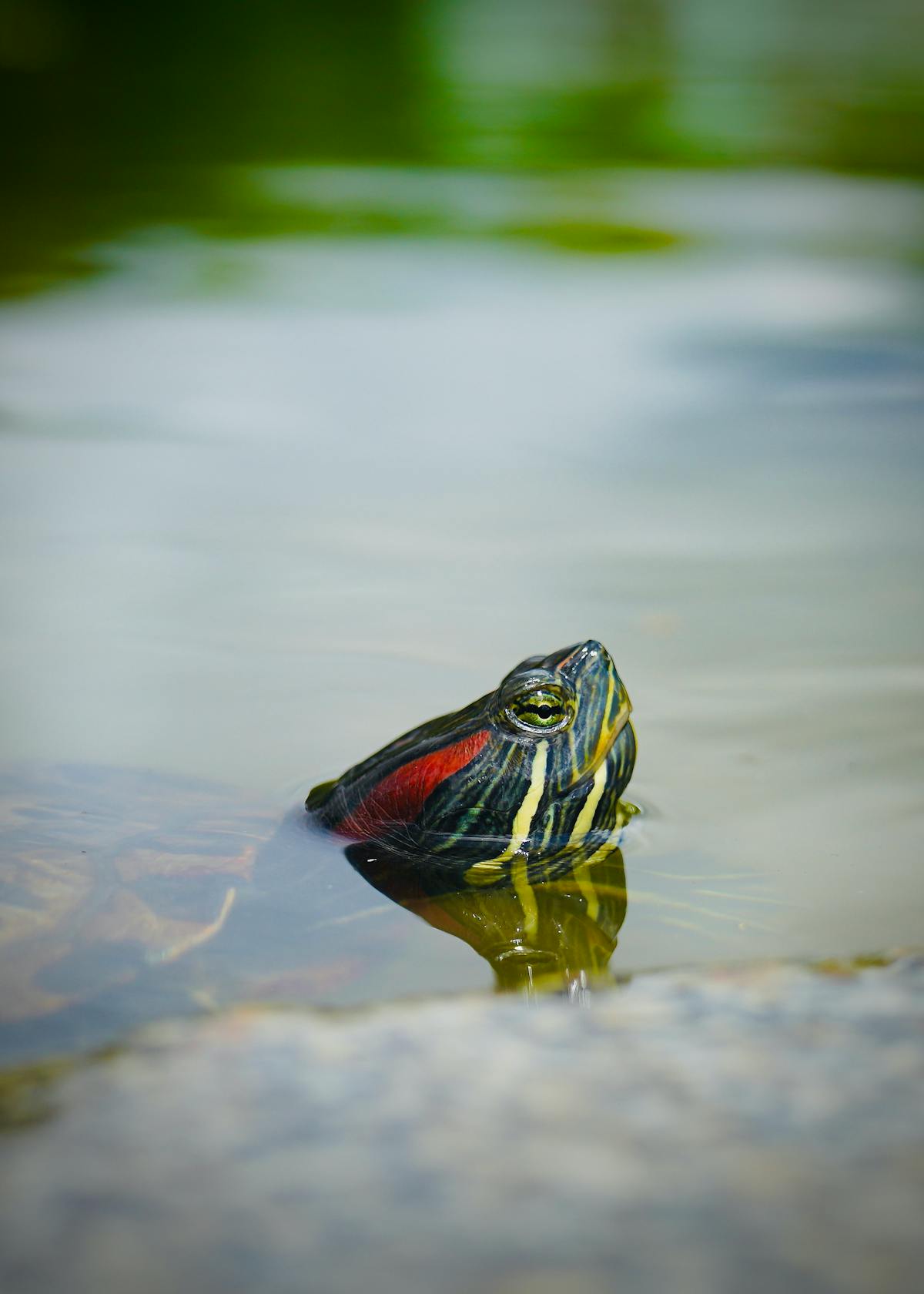
Painted turtles (Chrysemys picta) are North America’s most widely distributed turtle and one of the most recognizable. The eastern painted turtle, midland painted turtle, western painted turtle, and southern painted turtle are subspecies distinguished by shell pattern and geographic range. In captivity, painted turtles are kept in both aquarium setups and outdoor ponds, and can live 25 to 30 years with proper care. The birthday celebration is a tankiversary feast with appropriate variety feeding, a water quality check that’s genuinely more meaningful than any decoration, and a basking photo that documents the striking red and yellow markings that give the species its name.
Tankiversary vs. Birthday
Most painted turtle keepers don’t know the hatch date of their turtle. Painted turtles in captivity often came from the pet trade as juveniles without documentation. The tankiversary, the anniversary of when the turtle came into your care or when the pond or tank was set up, is the standard celebration date.
If you have an outdoor pond with painted turtles that may be wild-caught local animals, the ethics of the situation are worth examining: painted turtles should not be removed from the wild. Wild-caught painted turtles that are already established in captivity can be provided with appropriate care, but adding new wild-caught individuals isn’t appropriate. Captive-bred painted turtles from permitted breeders are the ethical acquisition option.
The Birthday Feast
Painted turtles are omnivores. Diet varies by age: juveniles are more carnivorous; adults eat significantly more plant matter.
For juveniles. Commercial aquatic turtle pellets as the base, supplemented with protein: small crickets, earthworm pieces, frozen bloodworms. Juveniles need high protein for growth.
For adults. Commercial aquatic turtle pellets, dark leafy greens (romaine, dandelion greens, red leaf lettuce), aquatic plants, and protein supplementation (frozen shrimp, earthworm pieces). Adults eat more vegetation.
Birthday variety protein. Frozen bloodworms, brine shrimp, small earthworm pieces. Offered as supplements to the regular diet. Feed what the turtle can eat in 10 to 15 minutes and remove uneaten food promptly.
What to avoid. Feeder goldfish (thiaminase risk). Wild-caught insects. Processed food with salt. Avocado (toxic per ASPCA). Iceberg lettuce (nutritionally empty).
Temperature note. Painted turtles regulate feeding based on water temperature. Below 50°F, feeding stops. Between 50 and 60°F, appetite is minimal. Above 60°F, normal feeding resumes. The birthday feast should be planned for when the water temperature supports active feeding.
Water Quality for the Tankiversary
The birthday water maintenance:
25 to 30% water change with dechlorinated water. Temperature-matched to the existing tank or pond water.
Filter maintenance. Rinse media in tank water, clean intake and output. Never in tap water.
Test parameters. Ammonia and nitrite at zero. Nitrates below 20 ppm. pH 6.5 to 8.0.
Basking platform check. The basking spot should reach 85 to 95°F surface temperature. UVB lamp should be functioning and within its replacement window. Painted turtles need UVB for vitamin D3 synthesis.
The Birthday Basking Photo
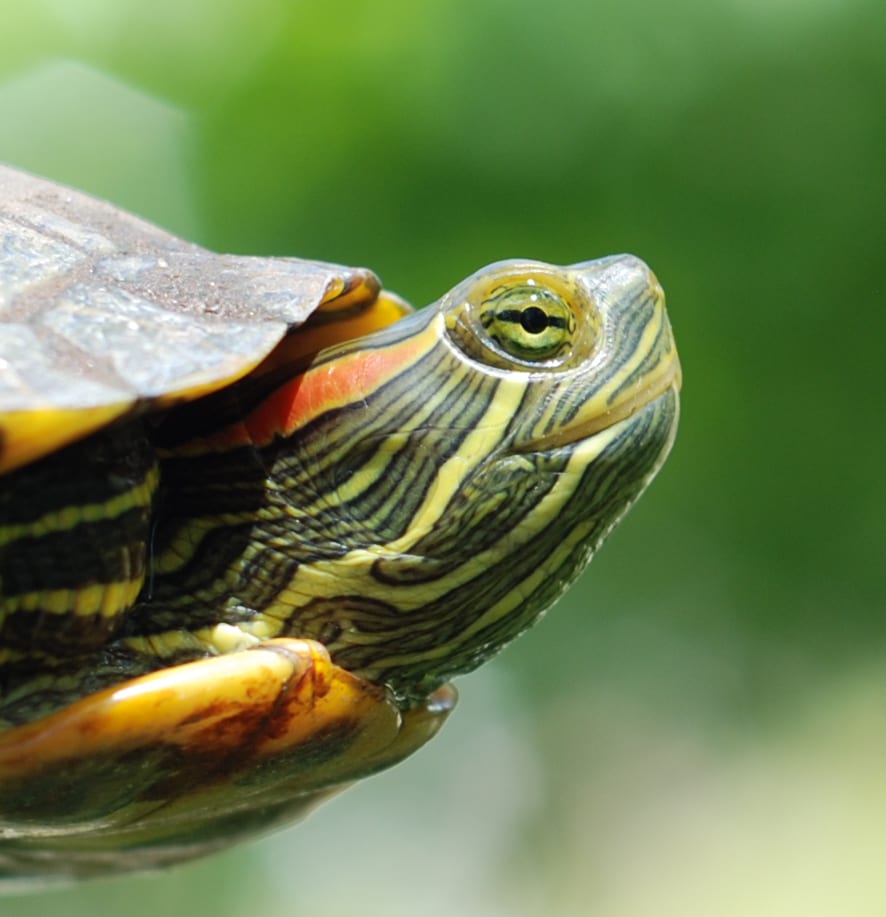
Painted turtles are most visible and most photogenic when basking. The red and yellow marginal (edge-of-shell) markings and neck striping that give the species its name are visible from above and from the side.
Outdoor pond basking. From above or from the side at pond level, a painted turtle fully extended in basking position, with all legs spread and head raised, shows the pattern clearly. Natural sunlight renders the colors more accurately than any artificial light.
Aquarium through-glass. The red neck stripes and plastron (belly) markings photograph well through clean aquarium glass with good lighting.
The annual comparison. Painted turtles grow slowly and the shell patterns and markings are relatively stable, making year-over-year comparison photos less dramatic than for koi or goldfish but still worth maintaining as an annual record.
How Long Do Painted Turtles Live?
In captivity with proper care, painted turtles live 25 to 30 years. Wild painted turtles have been documented living over 40 years. A painted turtle at 10 years is in the prime of its life.
FAQ
My painted turtle isn’t eating. Should I be concerned?
Painted turtles naturally stop eating as water temperatures drop in fall and may not resume until spring. This is normal brumation behavior. If the turtle is not eating during warm months (water above 60°F), check water parameters, basking temperature, and UVB lighting. Persistent refusal to eat in otherwise correct conditions warrants a vet visit.
Can I keep painted turtles in an outdoor pond?
Yes, with appropriate setup: a pond deep enough to avoid freezing solid in winter (at least 18 inches), good filtration, and a basking area with secure perimeter so the turtles can’t escape. Outdoor pond painted turtles often do better than indoor tank turtles because of natural sunlight, more space, and more enriched environment.
Party Supplies
- Dog Birthday Party Supplies Set, full party kit with hat, bandana, banner, and balloons.
- Puppy Cake Complete Birthday Cake Kit, peanut butter birthday cake kit with pan and candle.
- Bocce’s Bakery Birthday Cake Treats, wheat-free birthday treat biscuits.
Sources
- VCA Hospitals: Turtles
- ASPCA Animal Poison Control: People Foods to Avoid Feeding Your Pets
For the red-eared slider birthday (similar aquatic turtle): Red-Eared Slider Birthday Party Ideas
For the box turtle birthday (terrestrial): Box Turtle Birthday Party Ideas
- You
- Your pets
- Confirm