
Russian Tortoise Birthday Party Ideas: How to Celebrate Your Testudo
Russian tortoise birthday ideas from keepers who use Tortoise Trust guidance: the Testudo-appropriate birthday feast, outdoor grazing celebration, safe foods, and what the tortoise community does for hatch days.
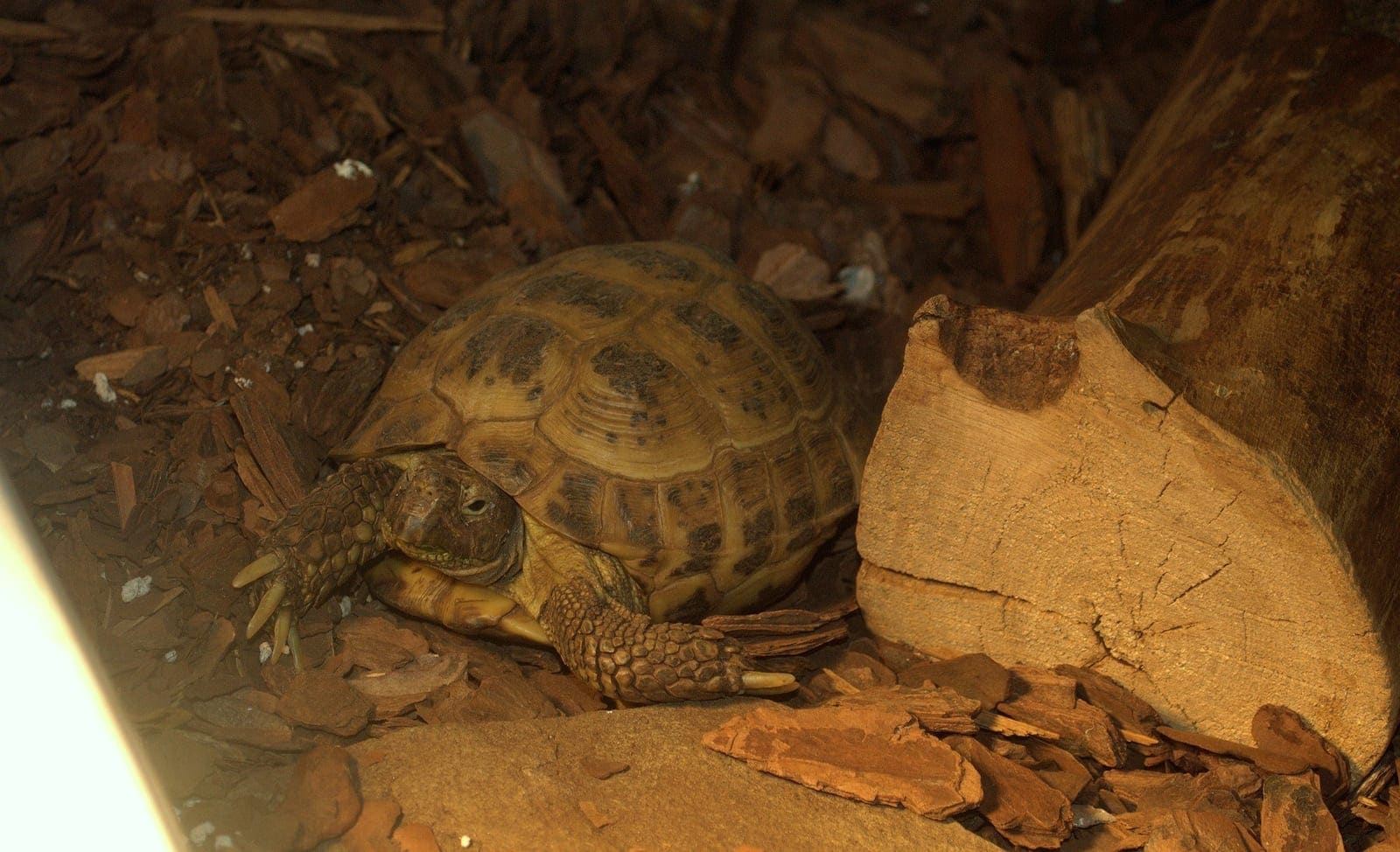
The Russian tortoise birthday is a good old-fashioned grazing session with safe weeds, a fresh hibiscus flower if you have one, and a warm outdoor afternoon in appropriately sunny weather. Russian tortoises (Testudo horsfieldii, also called the Afghan or Central Asian tortoise) are small, hardy, and long-lived. An adult Russian tortoise is typically 6 to 8 inches long and manageable enough to make a hands-on birthday celebration genuinely practical. The feast uses the Tortoise Trust’s dietary guidance because the internet is full of incorrect Russian tortoise diet advice and the consequences of getting it wrong accumulate over years.
The Birthday Feast: What Russian Tortoises Actually Eat
The Tortoise Trust is the primary reference for tortoise nutrition. Their guidance on Mediterranean and Central Asian tortoises (which includes Russian tortoises, whose native range spans from southeastern Russia through Kazakhstan, Afghanistan, and Iran) emphasizes high-fiber, low-protein, low-sugar foods. This is a species adapted to dry steppe and desert scrubland where calorie-dense food is not the norm.
Safe birthday foods:
Dandelion. The whole plant: leaves, stems, and flowers. Dandelion is one of the best foods for Russian tortoises and most eat it readily. For the birthday, a generous pile of fresh dandelion greens and flowers is the perfect centerpiece.
Plantain weed (Plantago species). Not the banana plantain, the common lawn weed. Broad-leaf plantain is excellent tortoise food. Available in most unmowed yards.
Clover. Both leaves and flowers. A small amount of clover added to the birthday spread is appropriate.
Hibiscus leaves and flowers. A favorite treat for most tortoises and visually striking for photos.
Prickly pear cactus pads. Remove thorns carefully. Opuntia is excellent tortoise food and most Russian tortoises eat it enthusiastically.
Dark leafy greens as a supplement. Collard greens, mustard greens, endive. These are nutritionally appropriate in moderation alongside the weeds.
What not to feed. The Tortoise Trust is explicit: avoid high-oxalate foods (spinach, beet greens, Swiss chard) because they bind calcium and contribute to kidney stones and MBD. Avoid protein-heavy foods (legumes, dog/cat food, anything with high animal protein) because tortoises in the wild get very little protein and high-protein diets cause pyramiding and kidney damage. Avoid fruit in quantity (too much sugar). Avoid iceberg lettuce (nutritionally empty). Avocado is toxic.
The birthday format. A morning grazing session in a secure outdoor space where the tortoise can forage among natural weeds, supplemented with a tray of the birthday items listed above. Let the tortoise find and eat on its own schedule. Don’t force-feed.
Supplementation. Calcium powder dusted on food several times per week is standard. UVB lighting (outdoors naturally, or a quality UVB bulb indoors) is important for vitamin D3 synthesis. The birthday supplementation schedule is the same as every other day.
Russian Tortoise Birthday Outdoors
Russian tortoises do well outdoors in warm, dry, sunny weather. Native to Central Asian steppes, they prefer:
Temperature. A basking spot of 90 to 95°F (in natural sunlight or a supplemental basking lamp). Ambient temperature of 75 to 85°F. They’re cold-tolerant compared to tropical species but should be brought inside or given access to a heated area when temperatures drop below 60°F.
The birthday grazing setup. A secure outdoor area with appropriate weed growth, a warm basking spot (flat rock or brick in full sun), and access to shade when the tortoise needs it. Russian tortoises thermoregulate actively: they’ll bask in the sun for warmth and retreat to shade when hot. Ensure both are available.
Security. Russian tortoises burrow and climb. A secure perimeter is necessary: buried border material to prevent burrowing out, and walls tall enough to prevent climbing out (at least 12 to 18 inches above ground, smooth material that can’t be gripped).
Birthday Handling and Photo Session
Russian tortoises are small enough to be photographed comfortably outside the enclosure with support. The species tends to retract into the shell initially when handled but relaxes relatively quickly when held by a familiar keeper.
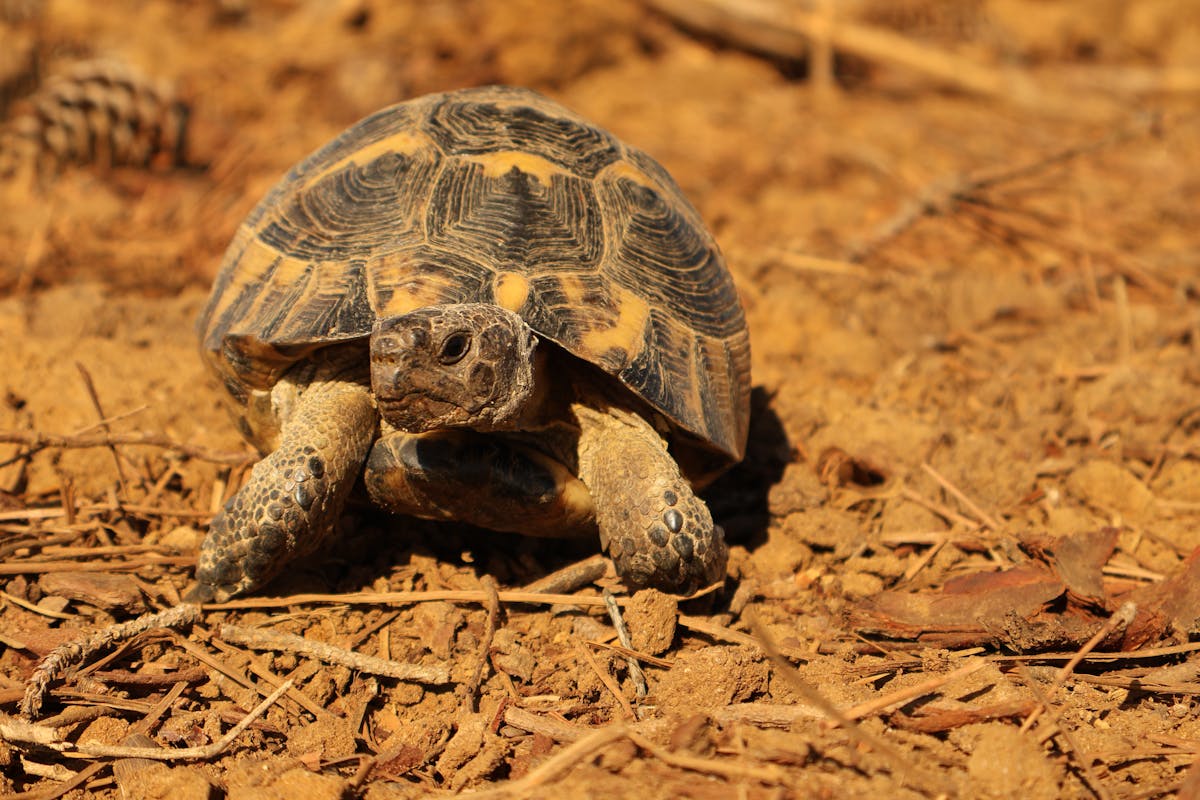
The birthday portrait. Set your Russian tortoise on a natural surface (a flat rock, the garden ground, a piece of slate) and photograph from the front at ground level. The face-on portrait shows the tortoise’s face, the four-toed feet, and the compact shell shape clearly.
The face close-up. Russian tortoise faces have a slightly rounded, blunt profile that photographs well at close range. The eyes are bright and alert. Natural outdoor light is the best for these shots.
Shell top-down. The scute pattern from above shows growth rings and the dome profile. A consistent annual top-down photo tracks the tortoise’s development and the shell condition over time.
The eating video. Set up a pile of dandelion greens or a hibiscus flower in front of the camera and let the tortoise approach and eat. The deliberate, methodical eating behavior of a tortoise is surprisingly engaging to watch and films well.
Hibernation and Birthday Timing
Russian tortoises hibernate. In their native range they hibernate for 4 to 6 months, and captive Russian tortoises in appropriate conditions should also hibernate. This matters for birthday planning: if your tortoise’s birthday falls during the hibernation window (typically October through February in the Northern Hemisphere, varies by individual and conditions), the celebration will wait.
A tortoise coming out of hibernation in spring is a meaningful occasion in itself. Many keepers treat the post-hibernation emergence as the functional birthday celebration even if the exact hatch date is different. The first feeding after hibernation is a community-celebrated event.
If you’re in a climate that doesn’t support outdoor hibernation or your tortoise doesn’t hibernate for health reasons, consult a reptile vet about whether controlled indoor hibernation is appropriate for your individual tortoise.
How Long Do Russian Tortoises Live?
Russian tortoises live 40 to 80+ years in captivity with proper care. Some documented animals have reached over 100 years. This is a multigenerational commitment. Estate planning for the tortoise is not unusual among serious keepers.
FAQ
My Russian tortoise is very active and pacing the enclosure walls. Is something wrong?
This can indicate a gravid (egg-bearing) female, spring emergence behavior, breeding season drive in males, or an enclosure that’s too warm. Context matters. A gravid female needs access to appropriate substrate for egg-laying. A male pacing in spring or fall may be responding to breeding season cues. Check temperature and enclosure conditions first.
Can I bring my Russian tortoise inside for birthday photos?
For a brief photo session in a warm room, yes. Don’t let the tortoise cool down significantly during indoor photos. Keep the session under 20 to 30 minutes and return to appropriate temperatures.
My Russian tortoise has a soft spot on its shell. Is this a problem?
Soft spots on a tortoise shell can indicate metabolic bone disease from calcium deficiency or inadequate UVB, or an injury. Either warrants a vet visit. Don’t proceed with a birthday feast until the underlying condition is assessed.
Party Supplies
- Dog Birthday Party Supplies Set, full party kit with hat, bandana, banner, and balloons.
- Puppy Cake Complete Birthday Cake Kit, peanut butter birthday cake kit with pan and candle.
- Bocce’s Bakery Birthday Cake Treats, wheat-free birthday treat biscuits.
Sources
- Tortoise Trust: Feeding Tortoises
- Tortoise Trust: Mediterranean Tortoise Care
- ASPCA Animal Poison Control Center: Animal Poison Control
For the sulcata tortoise (much larger) birthday: Sulcata Tortoise Birthday Party Ideas
For the general exotic birthday framework: Pet Birthday Party Guide
- You
- Your pets
- Confirm