
Veiled Chameleon Birthday Party Ideas: Celebrating Your Cham
Veiled chameleon birthday ideas from experienced keepers: the birthday feast with safe insects and plant matter, hydration setup, color display photography, and why chameleon celebrations look different from other reptile birthdays.
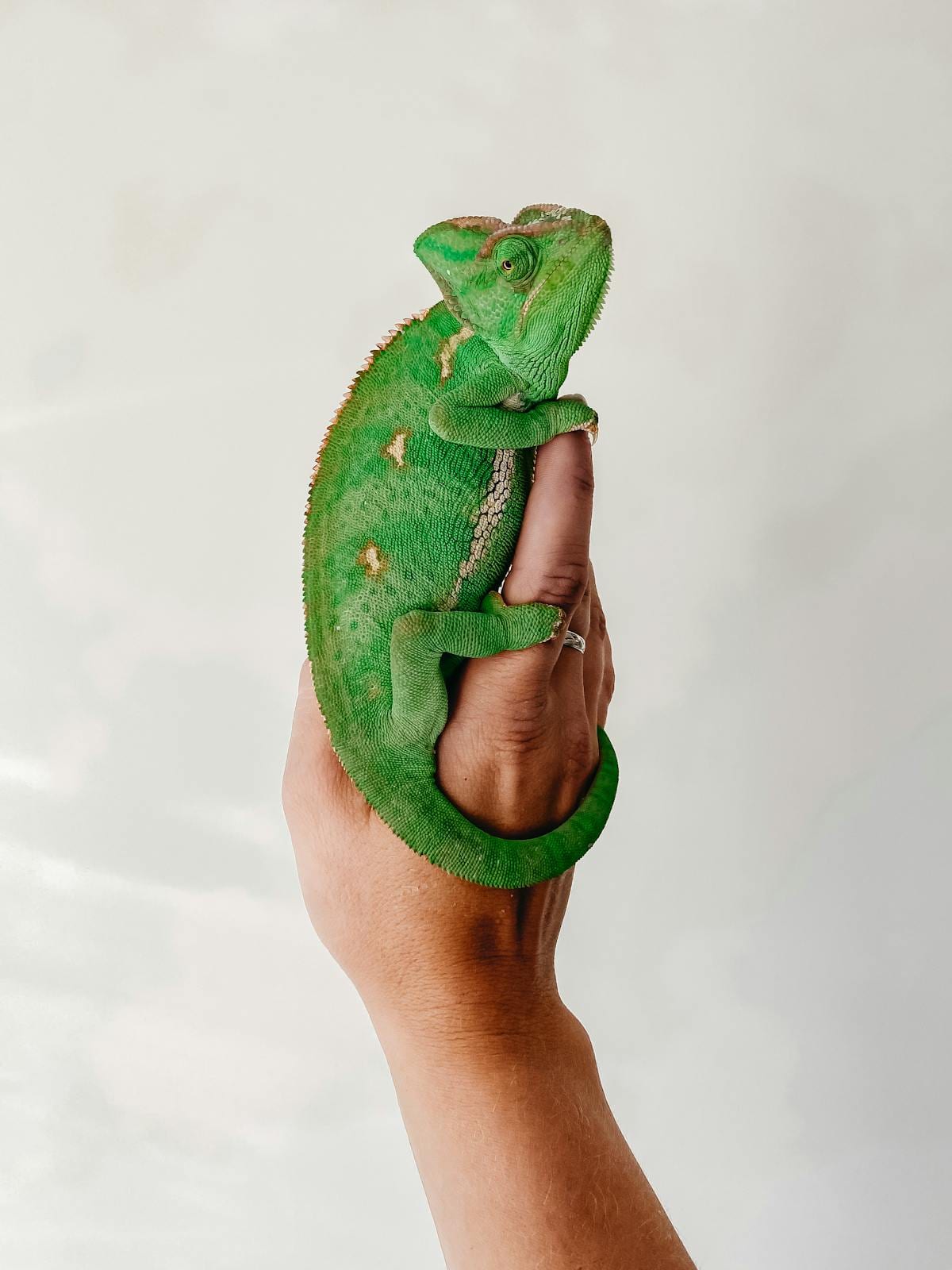
Veiled chameleon birthday celebrations work best when you understand what chameleons need from a day and what they don’t. They’re not handleable for extended periods. They’re not social in the way a bearded dragon or a blue-tongued skink is. The birthday for a veiled chameleon is a high-quality insect feeding with gut-loaded crickets and silkworms, a misting session timed for when the cham is active and visible, a color display photo if the lighting and the chameleon cooperate, and a new plant addition to the enclosure. Understated by reptile hobby standards. Correct for the animal.
The Birthday Feast: What Veiled Chameleons Actually Eat
Veiled chameleons (Chamaeleo calyptratus) are primarily insectivores with a secondary herbivorous component. The birthday feast should reflect both.
Gut-loaded crickets. The staple feeder for most chameleons in captivity. Gut-loading means feeding the crickets high-quality food (leafy greens, carrots, commercial gutload) for 24 to 48 hours before offering so that the nutrition passes through to the chameleon. A fresh, gut-loaded cricket is a very different nutritional item from a pet-store cricket that’s been sitting in a cardboard box. For the birthday feast, offer a slightly larger serving of gut-loaded crickets than the usual daily ration.
Silkworms: the birthday treat. Silkworms have an excellent nutritional profile: high protein, high calcium, low fat. Most chameleons eat them eagerly. If you can source silkworms for the birthday, they’re the community’s most-recommended special-occasion feeder.
Hornworms. Accepted and eaten readily by most chams. High moisture content (watch for loose stools if offered in quantity). A hornworm or two for the birthday is fine and provides good feeding engagement.
Dubia roaches. Not universally accepted by chameleons (some refuse roaches entirely) but a good feeder for those that take them. For the birthday feast, try if the chameleon is known to accept dubias.
The plant component. Veiled chameleons are unusual among pet lizards in that they eat plant matter as part of their diet, not just accidental ingestion. Safe plants in the enclosure serve double duty as habitat and food: pothos, hibiscus leaves, collard greens, dandelion greens. For the birthday, add a fresh hibiscus plant to the enclosure (unsprayed, pesticide-free) or offer fresh hibiscus leaves and flowers directly. Most veiled chameleons eat hibiscus leaves and flowers readily.
Calcium and vitamin supplementation. Dust feeders with calcium powder without D3 at most feedings. With D3 and multivitamin less frequently. VCA Hospitals’ veiled chameleon care guide provides a specific supplementation schedule. This doesn’t change on birthday day.
Hydration. Chameleons drink from water droplets on leaves, not from standing water. Birthday hydration is a thorough misting session. Mist the enclosure until droplets form on all the leaves and run down the sides of the cage. The chameleon will drink by licking the droplets. A dripper system left running for 30 to 60 minutes provides sustained hydration opportunity.
Handling: The Honest Assessment
Veiled chameleons are not handling-friendly reptiles for most individuals. Unlike a bearded dragon or a blue-tongued skink, most chameleons are stress-prone when handled and the community’s general guidance is to minimize handling except when necessary for health checks or enclosure maintenance.
Signs of a stressed chameleon: dark coloring (veiled chams darken when stressed or cold), hissing, gaping, lateral compression of the body to look larger. A chameleon showing these signals during handling should be returned to the enclosure.
Some individual chameleons do become tolerant of handling with consistent, calm, patient work over time. If yours is one of these, a brief birthday handling session for a photo is reasonable. Keep it short, be attentive to stress signals, and return them to the enclosure before they show visible stress.
The most appropriate birthday photo for a veiled chameleon is usually through the enclosure glass or mesh, with good lighting and the chameleon in its natural perched position.
The Color Display: What to Watch For
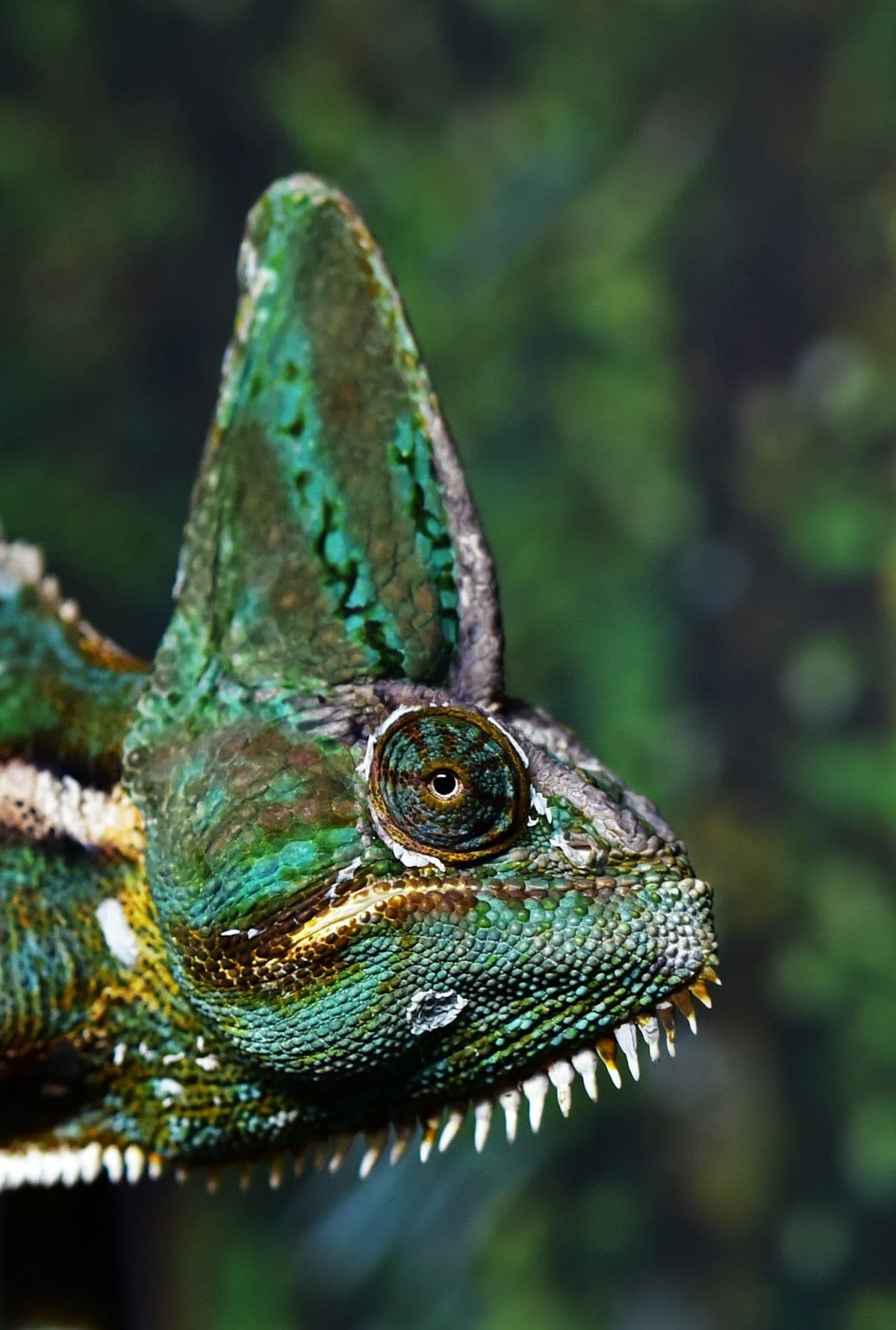
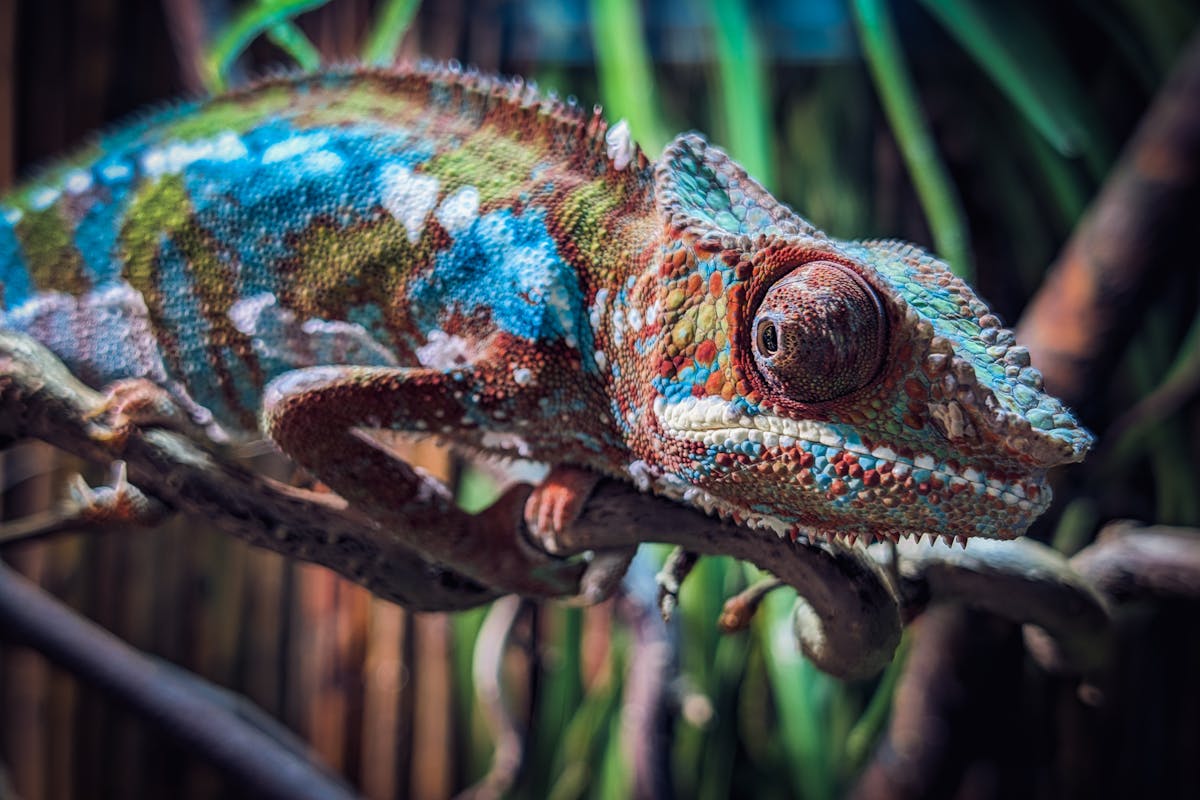
Veiled chameleons change color to communicate mood, temperature, health status, and social signals. The birthday is an occasion to observe and document the color display.
Bright green with blue and yellow highlights: Calm, warm, content. This is the best behavioral state for birthday photos.
Dark browns and blacks: Stress, cold, or threatened. Anything triggering this on birthday day should be addressed.
Bold patterns with bright colors during handling: Often indicates excitement or mild agitation. This can produce dramatically photogenic displays, but monitor stress levels.
Males vs. females. Adult male veiled chameleons have more vivid color displays than females. Females show color changes too, but adult males at peak display are the most visually striking. If you have a male, the birthday photo session, timed when the cham is warm and naturally active, is the opportunity for the best color documentation photos.
Enclosure Conditions and Why They Matter Even More on Birthday Day
Veiled chameleons are sensitive to environmental conditions. The birthday setup needs to be right:
Temperature. Basking spot of 85 to 90°F. Ambient day temperature 72 to 80°F. Night drop to 65 to 70°F is appropriate and often recommended for health. UVB lighting is non-negotiable for veiled chameleons.
Airflow. Chameleons require significant airflow to prevent respiratory infections. Screen enclosures, not glass, are the community standard. If you have a glass tank for any reason, this is a real health risk to address regardless of birthday status.
Humidity. 30 to 50% ambient with spikes to 80%+ during misting. This is managed by the misting frequency rather than a static setting.
The birthday misting. An extended misting session, longer than the usual routine, is a genuine birthday gift. Use a pressure sprayer or a timed automatic misting system if you have one. Let the mist run until the enclosure is covered in water droplets, then let it dry out before the next session. This mimics the morning misting and evening drying cycle of the chameleon’s native Yemen environment.
Birthday Enclosure Additions
Chameleons appreciate vertical space and a variety of perching options at different heights. A new plant or a new perching structure for the birthday is the most meaningful enclosure gift.
Live plants. Pothos, hibiscus, schefflera (umbrella plant), and safe ficus species are all appropriate for chameleon enclosures. Pesticide-free is mandatory. A new live plant added on the birthday both improves the enclosure and provides food. Hibiscus is the best choice because the leaves, stems, and flowers are edible.
New perching material. A new piece of natural vine, a cork tube, or bamboo at a different height in the enclosure gives the chameleon new territory options.
How Long Do Veiled Chameleons Live?
Male veiled chameleons typically live 6 to 8 years in captivity. Females have a shorter lifespan on average, 4 to 6 years, in part due to the physiological stress of egg production. A 5-year birthday for a male veiled chameleon is a genuine achievement that reflects good husbandry.
FAQ
My chameleon barely moves on most days. Is this normal or a sign of illness?
Veiled chameleons can be deceptively still, especially females and older animals. They sit in one spot for hours. This is normal thermoregulation behavior as long as the animal is eating, drinking (you should see them licking water droplets during misting), and the coloring is appropriate for the situation. A chameleon that is consistently very dark, lethargic, not eating, and not drinking is showing signs of illness. Consult a reptile vet.
Should I keep my chameleon in a separate feeder container for the birthday feast?
No, this isn’t a common practice for chameleons. Offer the birthday feast in the enclosure. Place the crickets or silkworms directly on the plants or in a small feeding cup clipped to the side of the enclosure. Chameleons do not do well with the stress of transfers between containers.
My female chameleon looks fat and lethargic. Is she sick?
A female veiled chameleon that appears gravid (swollen abdomen) may be carrying unfertilized eggs. Female veiled chameleons produce clutches of eggs even without mating, and egg retention or dystocia (inability to lay) is a medical emergency. If your female appears gravid and this is not her normal cycle for which you’re prepared, consult a reptile vet. This is not a birthday-specific issue but it can coincide.
Can I take my chameleon outside for birthday photos?
In appropriate warm weather (above 70°F, not direct midday sun), a supervised outdoor session on a natural branch can be enriching for a veiled chameleon and produces great photos with natural light. The chameleon must be directly supervised at all times and cannot be put in a situation where it can escape into trees. Keep the session under 20 to 30 minutes.
Party Supplies
- Dog Birthday Party Supplies Set, full party kit with hat, bandana, banner, and balloons.
- Puppy Cake Complete Birthday Cake Kit, peanut butter birthday cake kit with pan and candle.
- Bocce’s Bakery Birthday Cake Treats, wheat-free birthday treat biscuits.
Sources
- VCA Hospitals: Veiled Chameleons
- ASPCA Animal Poison Control: People Foods to Avoid Feeding Your Pets
- ReptiFiles: Veiled Chameleon Care Guide
For a more handleable lizard birthday: Bearded Dragon Birthday Party Ideas
For the general exotic birthday framework: Pet Birthday Party Guide
- You
- Your pets
- Confirm