
What Goats Can (and Can't) Eat at a Birthday Party: The Complete Safe Foods List
Verified safe and unsafe foods for goat birthday parties. What goats enjoy as treats, what causes problems, the copper toxicity issue, and the ornamental plants that end birthday parties badly.
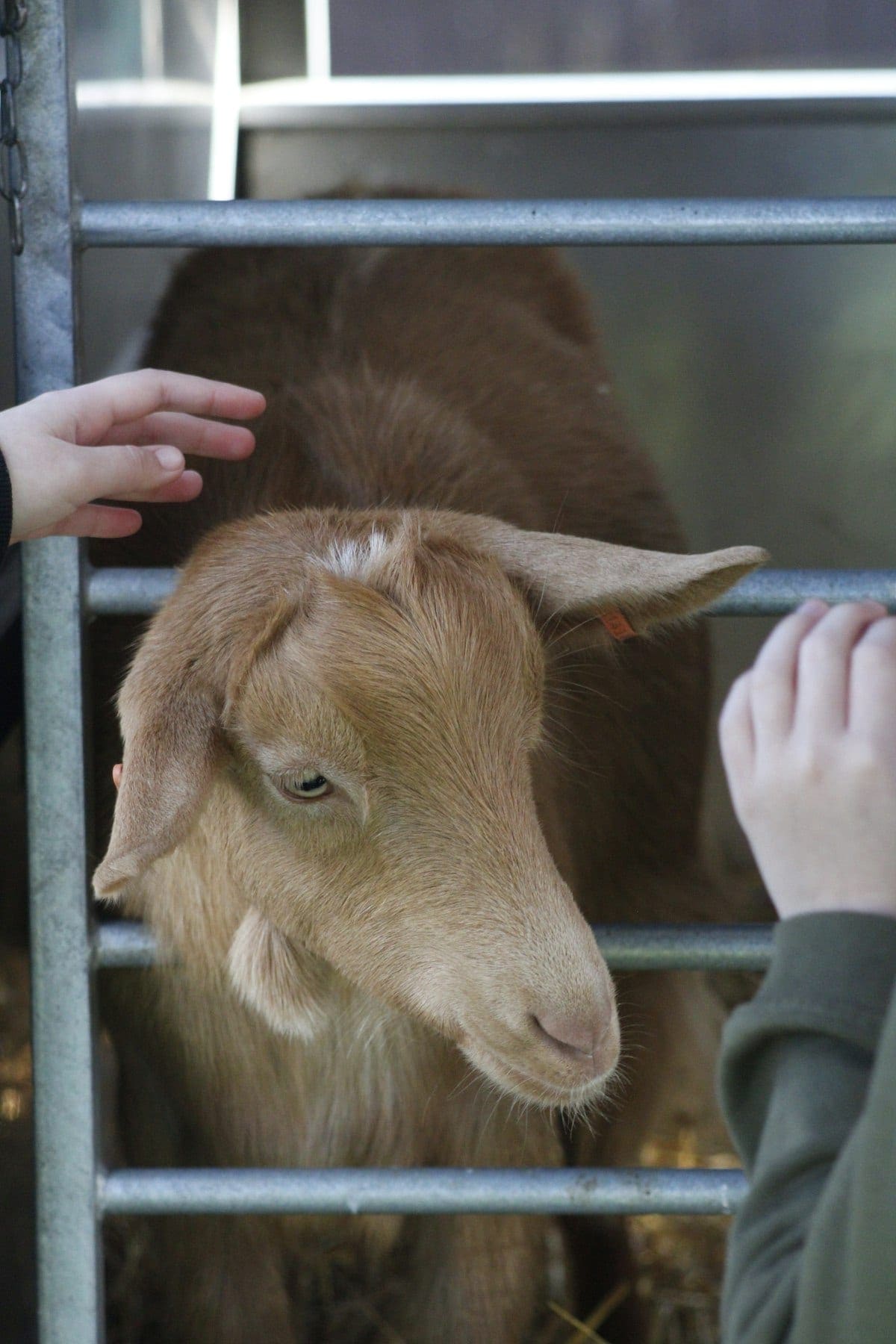
Goats are browsers. Their natural foraging behavior involves sampling a wide variety of plants and plant material. This means the safe foods list is long, wider than dogs, cats, or rabbits. The constraint is a specific list of toxic plants and a mineral imbalance risk (copper) that catches many goat owners off guard.
For a birthday party, the practical goal is building a treat spread from the safe list below while keeping the dangerous items out of the enclosure.
Safe Foods
Per Penn State Extension and University of Maryland Extension goat nutrition guidelines:
Fruits: Apple (core removed), pear (core removed), watermelon (flesh and rind), banana (flesh and peel), grapes, strawberries, blueberries, raspberries, melon (cantaloupe, honeydew), mango (flesh only, pit removed), peach and plum (flesh only, pit removed), kiwi.
Vegetables: Carrots, celery, cucumber, leafy greens (romaine, kale, chard, arugula), green beans, corn (fresh or frozen thawed), pumpkin (flesh and seeds), beets, turnips, parsnips, sweet potato (cooked).
Herbs: Basil, mint, parsley, cilantro, thyme, oregano, dill. Most goats eat fresh herbs enthusiastically and herbs are a good low-calorie treat addition to the birthday spread.
Grains (in small amounts): Plain oats, hay cubes, alfalfa cubes. These are treats in the context of a celebration, not dietary staples.
Commercial goat treats: Manna Pro Goat Treats and similar products specifically formulated for goats. Check that any treat is explicitly for goats, sheep treats are low in copper (see copper note below), cattle treats have different mineral profiles.

The Copper Problem
This is the most important non-obvious item on this list.
Goats have a specific copper requirement that differs from sheep (much lower copper tolerance), cattle, and horses. A supplement or feed designed for sheep will be deficient in copper for a goat. A supplement designed for cattle may deliver too much for some individual goats depending on their baseline. Mineral blocks sold generically for “livestock” are rarely calibrated for goat needs specifically.
For birthday treats, the practical rule: feed only fresh fruits, fresh vegetables, fresh herbs, and goat-specific commercial treats. These don’t carry the mineral imbalance risk. Avoid feeding any supplement, mineral block, or fortified feed that isn’t explicitly formulated for goats.
Cornell University CVM small ruminant resources have detailed copper toxicity documentation if you’re assessing specific supplements.
Unsafe and Toxic Items
Azaleas and rhododendrons: One of the more common goat poisoning causes in suburban and rural backyard settings. Contain grayanotoxins; cause severe GI distress and cardiac effects. Highly toxic.
Cherry, plum, peach, apricot, and other stone fruit plants: The flesh is safe as a treat (see above). The leaves, twigs, and wilting plant material contain cyanogenic compounds. Don’t let goats access the trees.
Avocado: Persin in all parts, flesh, skin, pit. Toxic.
Onion and garlic: Hemolytic anemia via N-propyl disulfide. Applies to all forms: raw, cooked, powdered.
Rhubarb: Oxalic acid; kidney damage.
Lily of the Valley, foxglove, oleander: Cardiac glycosides; potentially fatal.
Yew: Extremely toxic to goats. Very small amounts can be fatal. Keep yew plants entirely away from any goat area.
Nightshade family: Tomato leaves, potato leaves, eggplant leaves, unripe green fruit from these plants, all contain solanine or related alkaloids. Ripe tomatoes in small amounts are fine; the plant is not.
Bracken fern: Destroys thiamine and causes bone marrow suppression with repeated consumption. A pasture concern in some regions.
Moldy hay: Mycotoxins cause liver damage and neurological symptoms in goats. The birthday hay must be fresh.
Acorns in large quantities: Tannins in large quantity cause kidney damage. Occasional acorns from a tree in the pasture are generally tolerated; consistent heavy access is a health risk.
Lupine: Causes lupinosis and is a problem during specific growth stages in areas where it grows naturally. A concern in the western US particularly.
Quick Reference Table
| Food | Safe? |
|---|---|
| Apple, pear, carrot (core/pit removed) | ✓ Yes |
| Watermelon, grapes, banana | ✓ Yes |
| Leafy greens, corn, pumpkin | ✓ Yes |
| Fresh herbs (basil, mint, parsley) | ✓ Yes |
| Goat-specific commercial treats | ✓ Yes |
| Azalea / Rhododendron | ✗ No, cardiac toxicity |
| Stone fruit leaves and twigs | ✗ No, cyanide |
| Avocado | ✗ No |
| Onion and garlic | ✗ No |
| Yew | ✗ No, potentially fatal |
| Moldy hay | ✗ No |
| Livestock feeds not formulated for goats | ⚠ Check copper content |
For the full party setup, see goat birthday party ideas. For treat recipes, see goat birthday treats.
Goat Birthday Supplies
Goat birthdays: enrichment, quality treats, and flock engagement:
- Manna Pro Goat Treats, natural flavored treats approved for goats.
- Slow Feed Hay Net for Goats, hay net upgrade as the birthday gift.
- Goat Enrichment Ball, large rubber ball for goat enrichment.
Sources
- Penn State Extension, Feeding Goats, extension.psu.edu/feeding-goats
- University of Maryland Extension, Goat Nutrition, extension.umd.edu/resource/goat-nutrition
- Cornell University CVM, Small Ruminants, vet.cornell.edu/animal-health-diagnostic-center/species/small-ruminants
- ASPCA, Toxic and Non-Toxic Plants, aspca.org/pet-care/animal-poison-control/toxic-and-non-toxic-plants
- You
- Your pets
- Confirm