
What Can Jumping Spiders Eat at a Birthday Party? Live Prey Only
Jumping spider birthday feast guide: appropriate live prey for Phidippus regius and bold jumping spiders, sizing rules, what triggers the hunting response best, and why the birthday feast is always live prey. University of Florida IFAS verified.
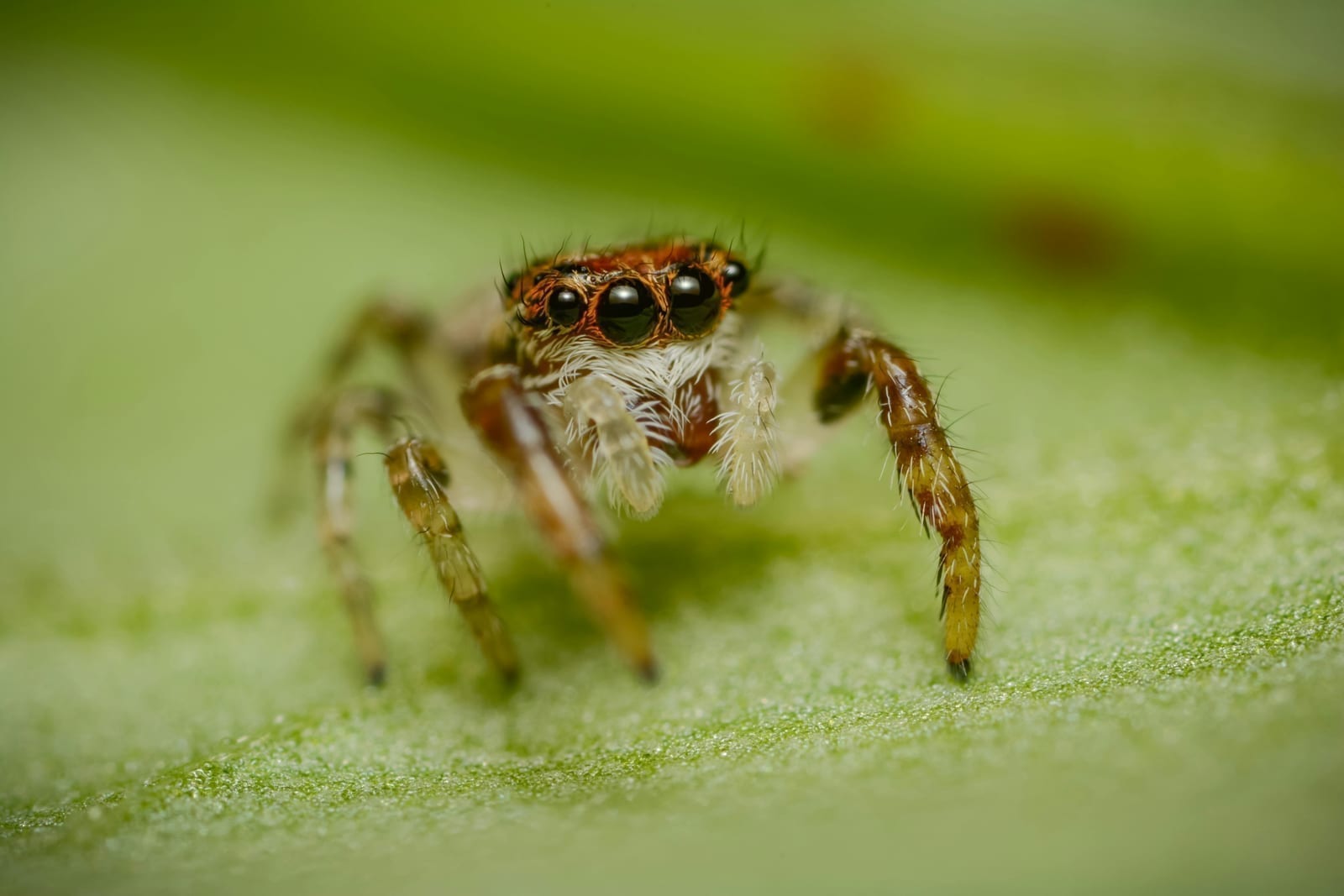
Jumping spiders eat live prey. Their hunting system is entirely vision-based: they track moving targets, calculate the jump, and strike. Dead or unmoving prey doesn’t trigger the hunting response reliably and isn’t appropriate as the primary feeding method. The birthday feast for a Phidippus regius, P. audax, or any other pet jumping spider is appropriately sized live prey that gives the spider a real hunting sequence: the stalk, the freeze, the precise jump. For an adult P. regius, a bottle fly or small dubia roach on the birthday is the feast. For a juvenile, fruit flies. For a larger species, potentially a larger prey item.
What Jumping Spiders Can Eat at a Birthday Party
Adult Phidippus regius (adult females especially):
- Bottle flies (Lucilia spp.), the premium birthday prey for large regius. The flight behavior maximizes the hunting engagement.
- Small to medium dubia roaches
- Crickets (appropriate size, slightly smaller than the spider’s abdomen)
- Butterworms (Chilecomadia moorei), accepted by many spiders, high in calcium
Subadult Phidippus regius and Phidippus audax:
- Bottle flies or larger fruit flies (D. hydei)
- Small crickets
- Small dubia roaches
Juvenile spiders and slings:
- Drosophila hydei (larger fruit fly species)
- Drosophila melanogaster (smaller fruit fly species) for very young slings
The birthday variety format: if you have multiple prey types available, offer a bottle fly first (for the flight drama and the full hunting display), then a dubia roach if the spider is still showing interest after the first prey item.
Sizing Rules That Don’t Change on Birthdays
All prey items should be smaller than the spider’s abdomen. This is the standard sizing guideline for all jumping spiders and applies regardless of occasion. Oversized prey creates handling difficulty and injury risk.
The Birthday Prey Experience
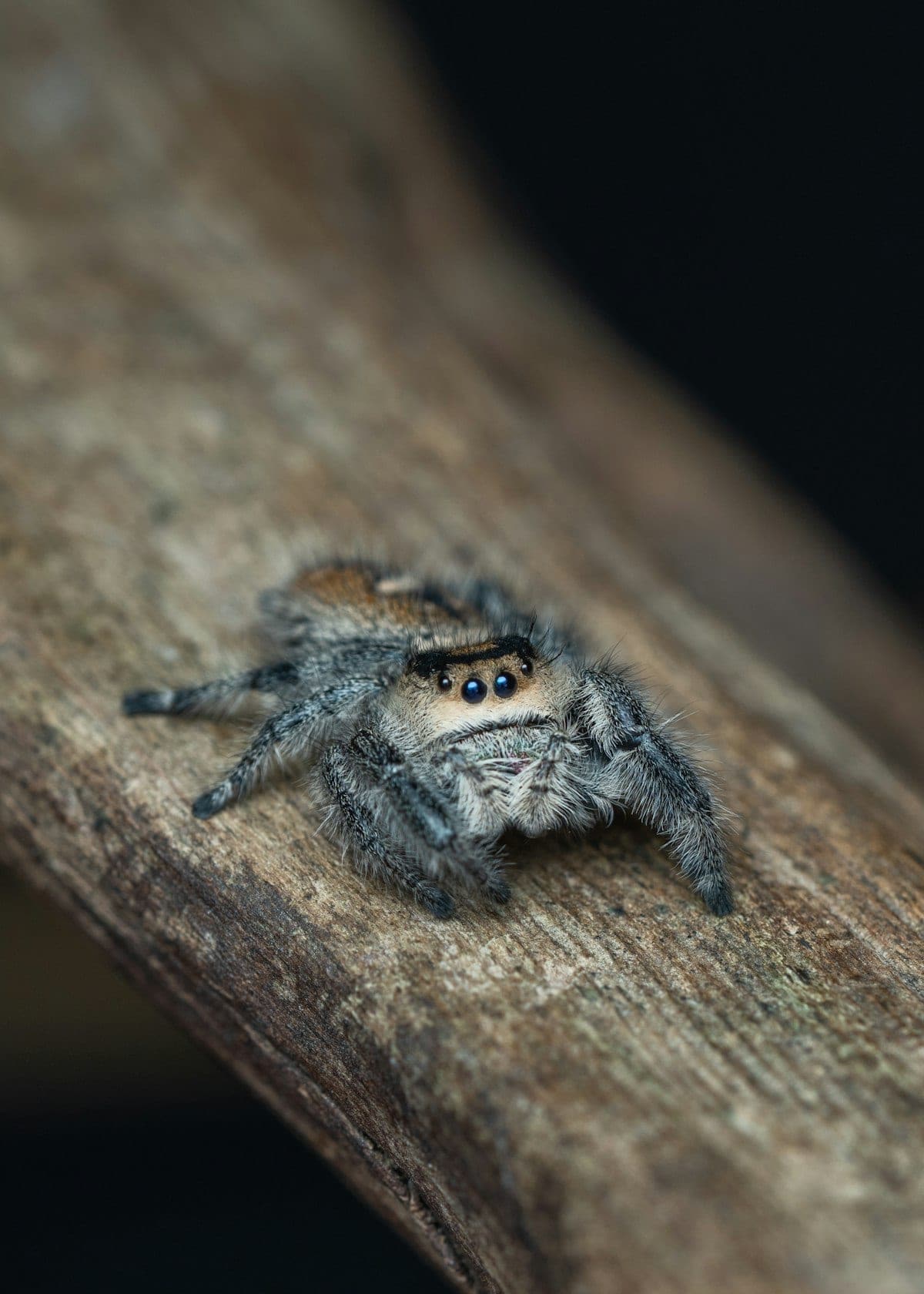
The birthday feast for a jumping spider isn’t just about nutrition. It’s about the behavioral engagement. A bottle fly released in the enclosure with an adult P. regius produces a complete hunting sequence: the spider notices the fly, turns to face it, orients precisely, and makes the jump. The whole sequence takes 10 to 30 seconds but is genuinely impressive. Film it. This is the birthday content the community wants to see.
For hand-feeding: release a bottle fly from your hand or allow the spider to hunt a dubia from tongs. A well-bonded P. regius that regularly hand-feeds will take prey from your hand on the birthday, which produces excellent close-up video.
What Jumping Spiders Cannot Eat
Dead prey. Jumping spiders may occasionally accept pre-killed prey from experienced keepers who can animate it with tongs, but this isn’t the standard approach. Live prey is the correct birthday food.
Wild-caught insects. Pesticide risk. Pet store or captive-bred feeders only.
Prey too large for the spider. Oversized prey creates injury risk and feeding failure.
Any non-insect food. Jumping spiders are obligate invertebrate predators. No plant matter, no processed food, nothing outside the insect prey category.
FAQ
My jumping spider only ever eats fruit flies. Can I still have a birthday feast?
Yes. A generous offering of D. hydei (the larger fruit fly species) is an appropriate feast for a spider that prefers small prey. Release 10 to 15 fruit flies into the enclosure at once and watch the spider hunt them systematically. This is the birthday feast for smaller spiders and fruit-fly-preferring individuals.
Can jumping spiders eat mealworms as a birthday treat?
Some jumping spiders accept mealworms; others don’t. Mealworms are slow-moving, which doesn’t trigger the same prey-drive response as flying or fast-moving insects. They’re nutritionally adequate and accepted by some keepers as a variety item. For the birthday, a flying prey item is more engaging if available.
My spider refused the birthday prey. Is something wrong?
The most common reasons: premolt (the spider stops eating before a molt), recently molted (wait 48 to 72 hours), already fed recently (not hungry), or prey size is wrong. If the spider is otherwise healthy and active, one refusal isn’t a concern. Try again the next day.
Jumping Spider Birthday Supplies
Jumping spider birthdays: new decor and a special feeder treat:
- Bottle Fly Pupae for Jumping Spiders, preferred feeder size for most jumping spiders.
- Cork Bark for Spider Enclosure, natural cork bark as enclosure enrichment.
- Air Plant Tillandsia, live air plant for the enclosure. No soil needed.
Sources
- University of Florida IFAS: Regal Jumping Spider (Phidippus regius)
- AB Spiders: Phidippus regius Care Guide
- ASPCA Animal Poison Control Center: Animal Poison Control
For the full birthday party guide: Jumping Spider Birthday Party Ideas
For the tarantula prey comparison: What Can Tarantulas Eat at a Party?
- You
- Your pets
- Confirm