
What Can Russian Tortoises Eat at a Birthday Party? The Testudo Feast Guide
Russian tortoise birthday food guide: safe weeds and plants from the Tortoise Trust, the low-protein requirement that has no birthday exception, the hibiscus treat tradition, and the complete no-list. Tortoise Trust verified.
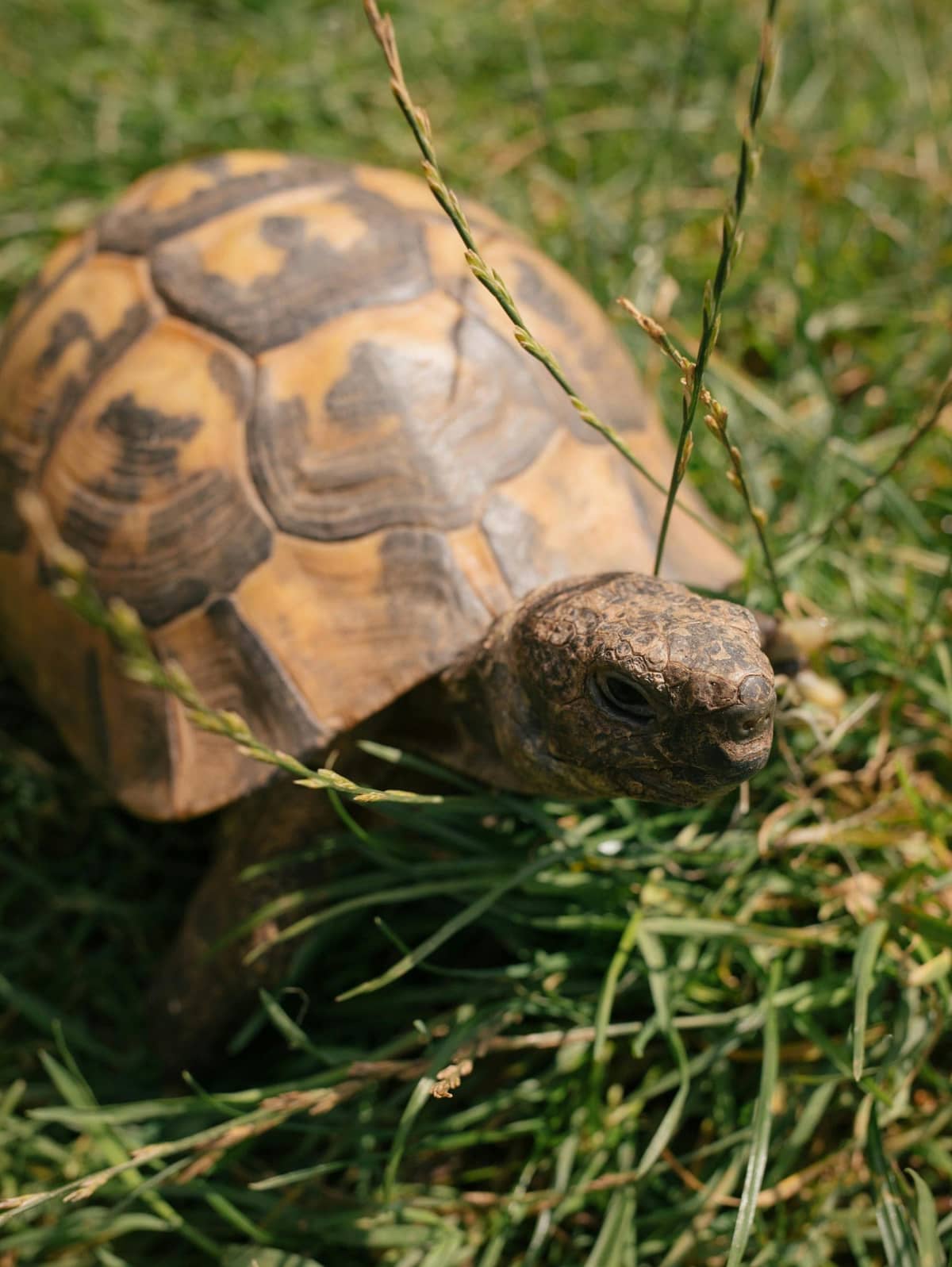
Russian tortoises (Testudo horsfieldii) are from arid grasslands and steppes of Central Asia. Their digestive systems are built for dry, fibrous, low-calorie plant material, grasses, weeds, and fibrous plants that most animals can’t subsist on. The birthday feast reflects this. The Tortoise Trust’s feeding guidance is the primary reference: high-fiber, low-protein, low-sugar plants. No animal protein. No high-oxalate greens in significant quantities. The birthday “treat” is a hibiscus flower or a pile of dandelion, not a piece of fruit or a mealworm.
What Russian Tortoises Can Eat at a Birthday Party
Weeds and plants (the primary birthday food):
- Dandelion (leaves, stems, and flowers), the most-recommended tortoise food across the Testudo family
- Broadleaf plantain (Plantago major), the common lawn weed
- Clover (leaves and flowers)
- Chickweed
- Hawkweed
- Sow thistle
A birthday morning of supervised grazing on a pesticide-free lawn with appropriate weeds is the best feast possible. Let the tortoise forage naturally.
Safe supplementary greens (in moderation):
- Collard greens
- Mustard greens
- Turnip greens
- Watercress
- Arugula
These are appropriate supplements when natural weeds aren’t available. They should be supplementary, not the sole food source.
Birthday treat options:
- Hibiscus leaves and flowers, the keeper community’s most-recommended tortoise birthday treat
- Prickly pear cactus pads (Opuntia, thorns removed), excellent tortoise food, most Testudo eat them readily
Limited safe additions:
- Small amounts of squash or zucchini
- Cucumber (mostly water, limited nutritional value but accepted)
Russian Tortoises vs. Sulcata: Slightly Broader Range
Russian tortoises are often considered slightly more adaptable than sulcata tortoises in their dietary preferences. They tolerate occasional small amounts of fruit better than sulcatas (who should have virtually no fruit). This doesn’t mean fruit is appropriate for birthdays, the Tortoise Trust guidance still emphasizes limiting sugar-containing foods, but a small piece of fig or apple on the birthday is less problematic for a Russian tortoise than for a sulcata.
What Russian Tortoises Cannot Eat
Animal protein. Meat, insects, cat food, dog food. All cause kidney damage and shell pyramiding with regular feeding.
High-oxalate greens in large amounts. Spinach, beet greens, Swiss chard, rhubarb. Bind calcium, contribute to kidney stones. Avoid on birthday as on all other days.
Fruit in large quantities. Too high in sugar for this species. A small piece as an occasional treat is different from a fruit-forward birthday feast.
Iceberg lettuce. Nutritionally empty.
Avocado. Toxic per ASPCA.
Fireflies. Lethal. Contains bufadienolides. No wild-caught insects or organisms for tortoises.
High-protein foods (legumes, beans). Cause pyramiding.
Wild-caught plants from unknown areas. Pesticide risk. Any foraged plants must come from verified pesticide-free areas.
FAQ
Can I give my Russian tortoise fruit as a birthday treat?
A small piece of fig, apple, or strawberry as an occasional treat is less harmful for a Russian tortoise than for a sulcata. Keep it small and infrequent. The birthday treat is better as a hibiscus flower or a dandelion patch than as a fruit piece.
My Russian tortoise is hibernating around its birthday. When do I celebrate?
Post-hibernation emergence in spring is a natural celebration occasion in its own right, the tortoise is healthy, it’s waking up, and the first meal after hibernation is a significant moment. Celebrate the emergence if the birthday falls during hibernation.
Is the diet for a Russian tortoise the same as for a Hermann’s tortoise?
The Tortoise Trust provides similar guidance for both species since they share an ecological background as Mediterranean-climate grazing tortoises. The high-fiber, low-protein, low-sugar approach applies to both.
Party Supplies
- Dog Birthday Party Supplies Set, full party kit with hat, bandana, banner, and balloons.
- Puppy Cake Complete Birthday Cake Kit, peanut butter birthday cake kit with pan and candle.
- Bocce’s Bakery Birthday Cake Treats, wheat-free birthday treat biscuits.
Sources
- Tortoise Trust: Feeding Tortoises
- Tortoise Trust: Mediterranean Tortoise Care
- ASPCA Animal Poison Control: Animal Poison Control
For the full birthday party guide: Russian Tortoise Birthday Party Ideas
For the sulcata tortoise food comparison: What Can Sulcata Tortoises Eat at a Party?
- You
- Your pets
- Confirm